

Choosing the Right C-Arm: Comparing Today’s Top Veterinary Models
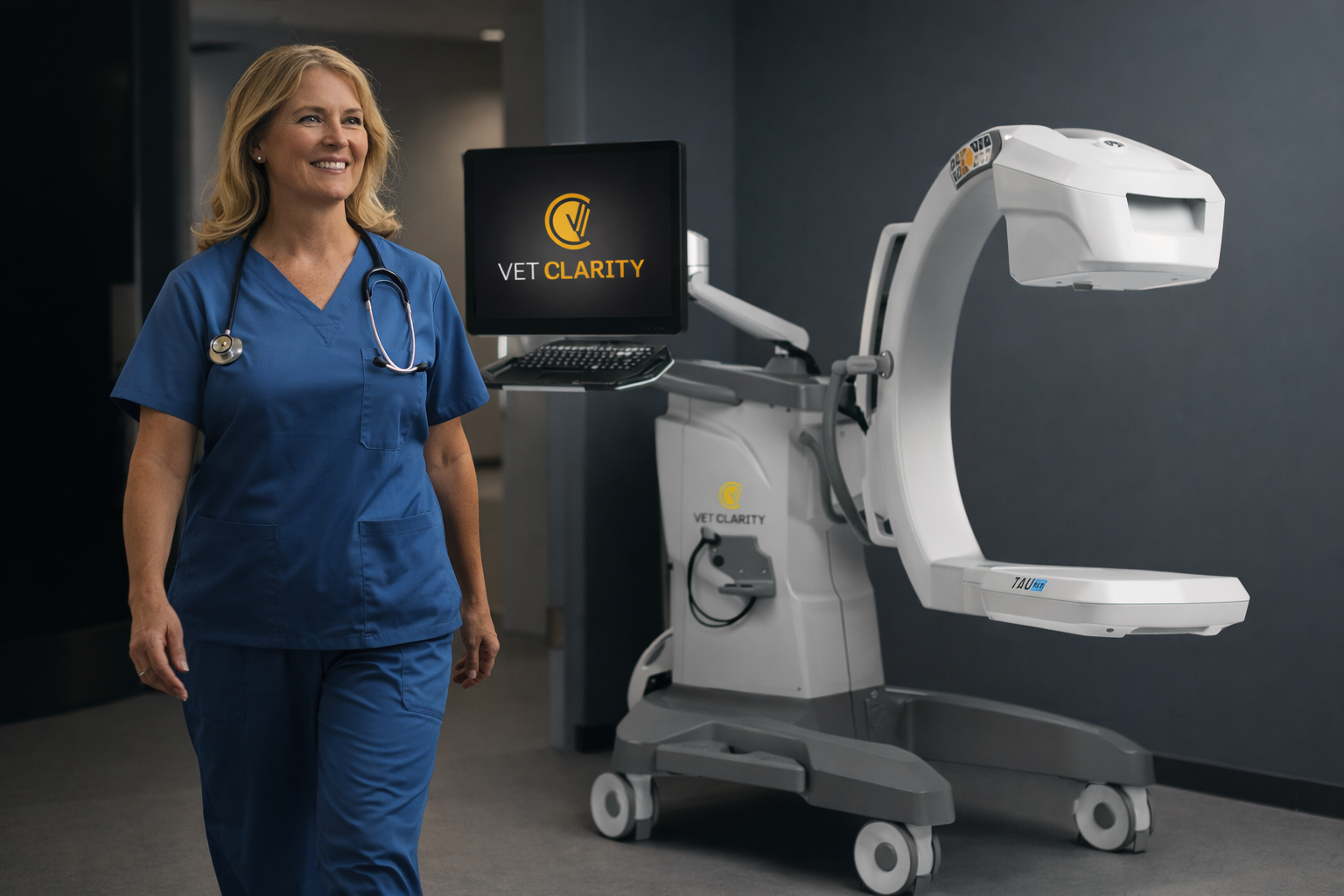
Choosing a C-arm is one of the most significant equipment decisions a veterinary practice can make.
Between mobile and mini systems, varying dose technologies, and wildly different footprints, it can feel overwhelming to determine what actually matters for your clinical needs.
Whether your practice focuses on orthopedics, ER, general surgery, or mobile specialty work, the right C-arm will strike the perfect balance between image quality, ease of use, safety, and cost.
This guide breaks down the key differences and highlights what to look for.
Mobile vs. Mini C-Arms: Which One Fits Your Practice?
Mobile C-Arms
These full-size systems are best suited for:
High-volume orthopedic hospitals
Specialty centers performing complex soft tissue or vascular interventions
Clinics with spacious ORs and high caseloads
Advantages and Considerations:
Full-size mobile C-arms offer a larger field of view and greater versatility for advanced interventional work, often with features such as DSA. However, they come with clear trade-offs—a larger footprint, higher cost, and greater space and training requirements to integrate smoothly into a practice.
Mini C-Arms
Initially designed for human extremity imaging, veterinary-focused mini C-arms have evolved into highly effective tools for small-animal orthopedics and foreign-body procedures.
A strong example is the Orthoscan Tau 1515, which features a compact, all-in-one footprint that fits seamlessly into ORs that were not originally planned to support fluoroscopy.
Advantages and Considerations:
Mini C-arms are highly maneuverable and cost-effective, making them ideal for general practices, ortho-focused GPs, and mobile surgeons who need a small footprint and easy mobility. Their compact size does come with limitations, including a smaller field of view, limited full-body imaging, and the potential absence of advanced features such as DSA—Flat-Panel Detectors vs. Image Intensifiers.
Flat-Panel Detectors (FPDs)
FPDs are now considered the gold standard due to:
Higher resolution
Lower noise
Better consistency over time
Reduced distortion
Many modern C-arms use CMOS flat-panel technology, which delivers sharp, bright images with enhanced detective quantum efficiency to reduce noise and improve image quality at lower doses
Image Intensifiers
Image intensifiers are an older technology. While functional and often cheaper (especially refurbished), they:
Degrade over time
Produce more distortion at the edges
Offer lower contrast and resolution
For practices focused on orthopedic precision, flat-panel detectors are usually worth the upgrade.
Image Resolution and Dose: What Truly Matters
Resolution
Look for systems that offer:
High pixel density
High signal-to-noise ratio
Clear visualization of fine bone detail
Dose Reduction
Radiation safety is a critical consideration for veterinary teams. Modern systems use a combination of hardware and software to reduce dose.
Digital Subtraction Angiography
DSA or Digital Subtraction Angiography is most relevant for:
Vascular studies
Shunt evaluations
Pacemaker lead assessment
While not every C-arm includes DSA, practices planning to expand into advanced soft-tissue or cardiac procedures may want to prioritize it.
Footprint, Maneuverability, and OR Workflow
Clinics with limited space, or those that move between multiple Ors, should focus heavily on footprint and ease of movement.
If your OR space is tight or you anticipate moving between rooms, a mini C-arm may significantly improve workflow without sacrificing clarity.
What Does “Value” Look Like for Your Type of Practice?
For general practices, value often comes from cost-effective imaging, a small footprint, and easy day-to-day use. At the same time, orthopedic-focused GPs tend to prioritize high-resolution images, low dose, and workflow efficiency. This makes a flat-panel mini C-arm an excellent fit, especially for clinics performing frequent TPLOs where a newer detector pays off quickly.
Emergency and critical care hospitals benefit most from speed, reliability, and the ability to guide foreign body retrieval or urgent orthopedic stabilization, and may choose either a mobile or mini system depending on their caseload.
Specialty hospitals usually require full capabilities, including a large field of view, advanced software, and often DSA, making a full-size mobile fluoroscopy unit the most appropriate choice.
Meanwhile, mobile surgeons see the highest ROI from compact, portable, durable systems—typically mini C-arms designed with veterinary-first software and rugged construction for use across multiple clinics.
What Actually Matters?
When choosing a C-arm, the most important considerations are:
Does it deliver the image quality you need for your caseload?
Can your team use it quickly and confidently?
Does the footprint fit your clinic’s workflow?
Will the dose profile keep your team safe?
Is the price aligned with the value and procedures you plan to offer?
In the end, choosing the right C-arm is about finding the balance that fits your practice: image quality that supports the procedures you perform, technology your team can use confidently, and a system that integrates smoothly into your physical space and workflow.
Whether you’re upgrading your orthopedic capabilities, expanding your ER tools, or simply looking to improve surgical precision, the right C-arm can elevate the standard of care you deliver every day.