
Introducing the CO₂ Surgical Laser made by Youlan: Practical Value for Today’s Veterinary Practices
As surgical technology continues to evolve, veterinarians are continuously seeking tools that deliver greater precision, better outcomes, and improved workflow efficiency.
The CO₂ Surgical Laser made by Youlan stands out as a leading tool, combining the trusted physics of a 10.6 μm CO₂ wavelength with modern engineering, intuitive controls, and a thoughtful set of accessories that make it a fit for both general practitioners and specialists.
The Gold Standard Wavelength for Soft-Tissue Surgery
The CO₂ Surgical Laser made by Youlan operates at 10.6 μm, a wavelength with the strongest water absorption among surgical lasers. Because soft tissue is water-rich, this translates to:
Extremely shallow thermal penetration (100–200 μm)
A reversible thermal damage zone under 0.1 mm
Minimal lateral heat spread
Clinically, that precision brings the results veterinarians want most: a virtually bloodless surgical field, reduced postoperative swelling and pain, and faster healing for patients.
From delicate oral masses to periocular work, this wavelength delivers predictable and tissue-friendly performance.
Power and Control for Every Soft-Tissue Procedure
With a maximum output of 40 W and three operating modes (Continuous, Pulse, and Single), the YLQ1000VET adapts instantly to the needs of the procedure.
Power changes are smooth and sharply responsive, allowing surgeons to shift between:
Cutting
Vaporization
Fine ablation
Coagulation
This range means one device can handle everything from gross tumor excisions to ultra-fine detail work—without swapping instruments or disrupting surgical flow.
Ultrapulse Mode: Fine Cutting With Less Thermal Damage
The addition of an Ultrapulse mode provides extremely short, high-peak-power pulses that cut cleanly while minimizing heat deposition. For patients, this means:
Less collateral tissue damage
Cleaner incisions
Faster, more comfortable recovery
For veterinarians, it offers confidence when performing the most delicate soft-tissue procedures.
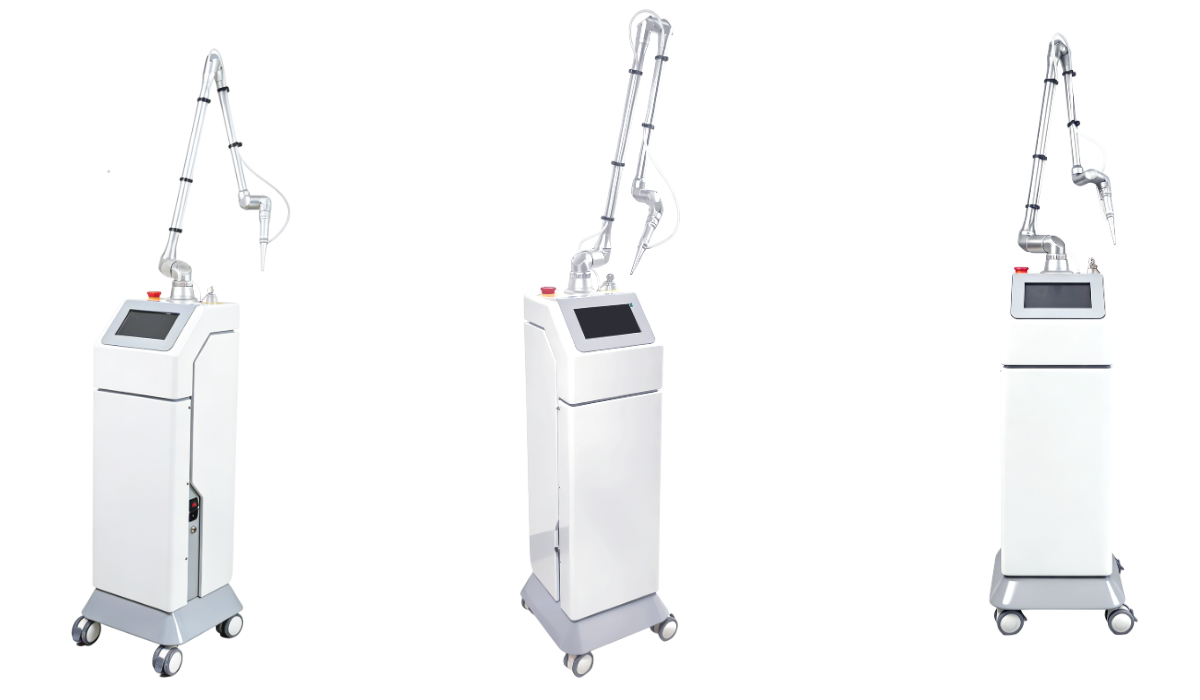
A 7-Joint Articulated Arm Designed for Daily Clinical Use
The laser’s seven-joint articulated light-guide arm is engineered for effortless control. It offers:
Smooth, flexible positioning
No drift during long procedures
An aiming beam that accurately shows spot size and location
This reduces surgeon fatigue and shortens the learning curve for clinicians new to CO₂ laser surgery.
While the arm contains glass components and should be protected from strong impacts, it remains highly robust under everyday clinical handling.
User-Friendly Interface for Efficient Workflow
The capacitive full-color touchscreen is designed around real clinical use. Veterinarians can:
Store user presets in every operating mode
Recall frequently used protocols in seconds
Set up procedures faster with fewer steps
For busy practices, this saves valuable minutes during each surgery—time that adds up.
A Handpiece Set That Shrinks the Need for Extra Equipment
The YLQ1000VET includes four standard handpieces and offers three optional specialty tips, allowing clinicians to perform soft-tissue procedures across:
Oral
Dermatologic
Ophthalmic
ENT
Urogenital
Anal sac
Tumor
…and more.
This single piece of equipment can enable 10+ high-value surgical services, providing a rapid return on investment, particularly for general practices expanding their surgical offerings.
Compact and Portable for Multi-Room Use
With a compact footprint, the YLQ1000VET can be moved by a single staff member between surgery, dental, and treatment rooms. This makes it especially attractive for:
Multi-room general practices
Specialty hospitals
Mobile veterinary surgeons
Your laser becomes a clinic-wide resource instead of a single-room investment.
Understanding the Limitations
Transparency matters when evaluating equipment, so it’s important to acknowledge two considerations:
Gradual Power Decline Over Time
Like all metal-tube CO₂ lasers, the YLQ1000VET may experience a gradual reduction in output after approximately three years of clinical use. This depends on factors like daily operating time and case volume. Surgeons can simply increase the power setting to maintain clinical effect, and tube replacement is typically infrequent.Mechanical Fragility of the Articulated Arm
The articulated arm includes glass components. It is sturdy under normal in-clinic handling, but should not be dropped or subjected to hard impact. Standard care and proper storage prevent issues.
These trade-offs are common to CO₂ laser technology and are easily managed in routine practice.
The Best In Its Class
The CO₂ Surgical Laser made by Youlanis a solid offering because it delivers the combination veterinarians need most:
Best-in-class wavelength for soft-tissue precision
Strong, adjustable power with versatile operating modes
Ultrapulse capability for fine cutting and low thermal damage
Reliable, drift-free articulated arm
Workflow-friendly touchscreen with user presets
Integrated smoke evacuation
Handpieces that support broad surgical capability
A compact, clinic-friendly design
A price point that allows rapid ROI
It’s a practical, high-performance CO₂ laser designed specifically for everyday veterinary use—and it offers the features clinicians value without unnecessary complexity or cost.