

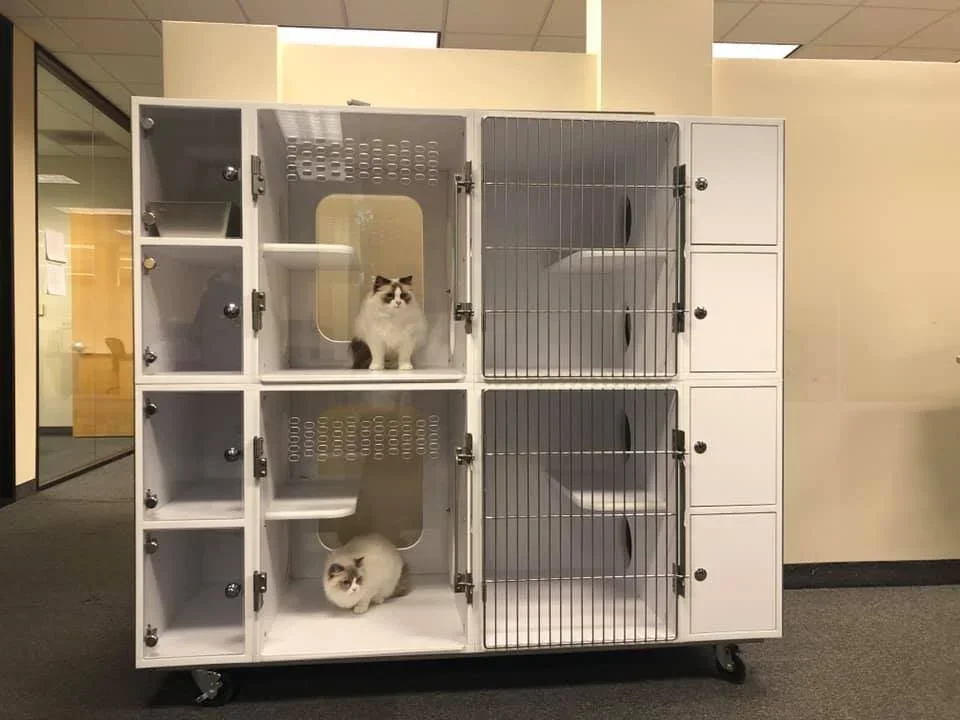
Cat-Only Cages: Not a Luxury—Basic Standard of Care
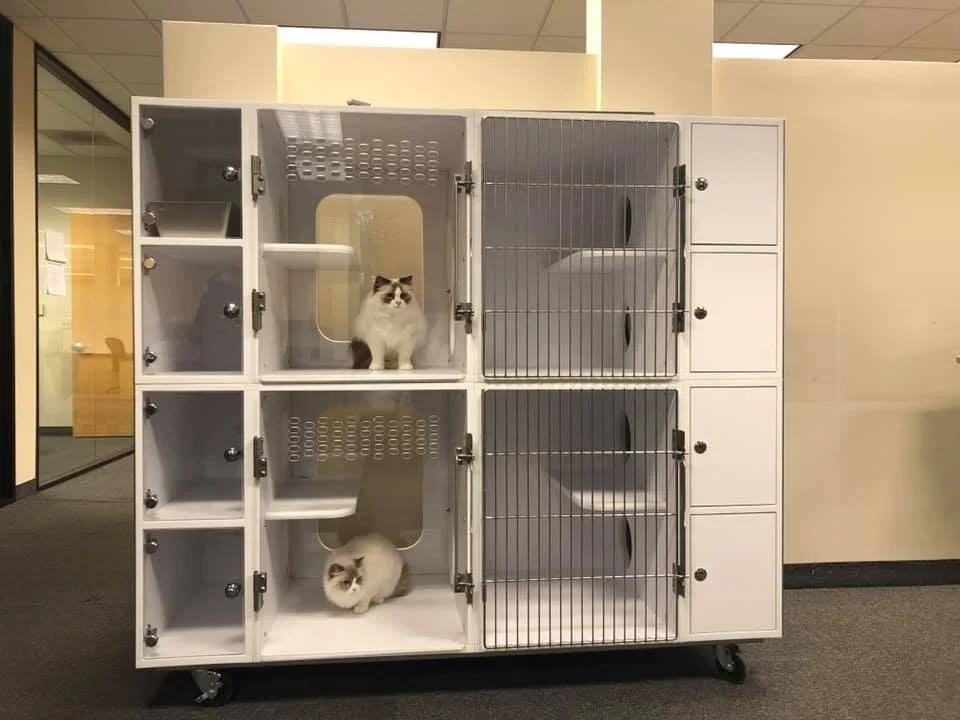
Feline-Friendly Housing Starts with Cat-Only Cages
If you’ve worked in a veterinary hospital for more than five minutes, you already know a cat’s experience the hospital very differently from dogs.
To us, it’s a routine appointment…
To a cat, it’s a sensory overload: new smells, unfamiliar sounds, barking dogs, restraint by strangers, and a total loss of control.
By the time many feline patients reach treatment or recovery, they’re already operating in fight-or-flight mode.
That’s where cat-only cages come in—and why they’re far more than a “nice to have.”
Stress Isn’t Just Emotional, It’s Clinical
Stress in cats doesn’t just look like hissing or hiding in the back of the cage. It shows up in measurable, clinically relevant ways:
Elevated heart and respiratory rates
Increased blood pressure
Stress-induced hyperglycemia
Masked pain or illness
Delayed recovery post-procedure
When cats are housed next to barking dogs or in high-traffic treatment areas, their stress levels remain elevated longer, which directly affects diagnostics, anesthesia recovery, and overall outcomes.
A calmer cat is a more accurate patient.
Cat-Only Cages Create a Quieter, More Predictable Environment
Dedicated feline housing helps reduce:
Noise exposure from dogs
Visual stressors (direct line of sight to other animals)
Vibrations and constant movement
Even small changes, such as raising cat cages, using solid dividers, or dedicating a separate bank of cages, can significantly improve a cat’s perceived sense of safety.
And when cats feel safer, they typically:
Eat sooner
Recover faster
Require less chemical restraint
Are easier (and safer) for staff to handle
Better for Cats = Better for Your Team
Let’s talk about your staff for a moment. Handling a highly stressed or fractious cat increases:
Bite and scratch injuries
Emotional fatigue and burnout
Time spent on restraint rather than care
Cat-only cages reduce the number of “on-edge” feline patients, which means:
Safer handling
Smoother treatments
More efficient workflows
That adds up, especially in busy hospitals where every minute and every staff injury matters.
Clients Notice More Than You Think
Cat owners are already anxious about bringing their cat in, often delaying care because they don’t want to stress them out.
When clients see:
A quiet feline-only area
Thoughtful cage placement
A team that clearly understands cat behavior
…it builds immediate trust.
This aligns closely with Fear Free and Cat Friendly Practice principles, but even outside of formal certification, dedicated feline housing sends a clear message:
“We understand cats, and we’ve designed our hospital with them in mind.” That perception influences client loyalty and compliance.
It’s About Intention, Not Square Footage
You don’t need a full feline-only ward to make a difference. Many hospitals successfully start with:
A designated cat-only cage bank
Physical barriers between cat and dog housing
Covered cage fronts for visual security
Separate recovery cages for feline patients
The Bottom Line
Cat-only cages improve:
Patient stress levels
Diagnostic accuracy
Recovery times
Staff safety
Client confidence
Feline care deserves the same thoughtful consideration we give to anesthesia protocols, imaging equipment, and surgical tools. Because when your patients feel safer, everyone wins.


Choosing the Right Veterinary ICU Cages for Your Hospital

A Guide to Buying ICU Cages for Veterinary Hospitals
When it comes to stabilizing critical patients, few investments matter more than your ICU cages.
These are life-saving environments where patients recover from surgery, trauma, illness, and other critical medical conditions.
It’s their safe space. Their home away from home.
Veterinary ICU cages are essential for several critical care functions, like:
Oxygen therapy and respiratory support
Post-operative recovery monitoring
Neurologic or immobile patient housing
Infectious disease isolation (with appropriate containment features)
Pain management and reduced handling for high-stress or critical patients
Nutritional support and fluid therapy in debilitated patients
They support both patient safety and treatment efficiency in emergency, surgical, and specialty care settings.
Choosing the proper ICU cage setup can significantly improve patient outcomes and convey a strong message to clients that their pets are receiving top-tier care.
Whether you’re building a new hospital or upgrading your treatment area, here’s what to look for when investing in veterinary ICU cages.
1. Temperature and Humidity Control
Critically ill patients often can’t regulate their body temperature, especially neonates, small exotics, or patients recovering from anesthesia. That’s where heated ICU cages come in.
Look for cages that allow precise control over temperature and humidity, ensuring you can support thermal needs without relying on external warming devices.
In some systems, built-in environmental monitoring allows you to adjust conditions in real-time—a game-changer for fragile post-operative or hypothermic patients.
2. Oxygen Delivery and Isolation Capabilities
Patients in respiratory distress need immediate oxygen support, and having the right cage system can mean the difference between scrambling with makeshift setups and delivering seamless care.
What to look for:
Built-in oxygen ports or sealed enclosures
Adjustable airflow to prevent CO₂ buildup
Compatibility with nebulizers or humidifiers
Doors with clear viewing panels for constant monitoring
Let’s look at Cammie, a 6-year-old feline with congestive heart failure, who presents in respiratory crisis. A sealed ICU cage with integrated oxygen delivery provides your team with a quiet, stress-free way to stabilize her while reducing handling and maintaining vital signs under control.
3. Easy Access and Smart Layout
Time matters when managing critical cases. ICU cages should allow for easy access to patients, effortless cleaning, and secure door latching.
Features like pull-out trays, built-in lighting, and stackable configurations also make a big difference in fast-paced environments.
Pro tip: Choose configurations that allow your team to work comfortably without having to reposition patients unnecessarily, critical in cases of fractures or neurologic deficits.
4. Size and Species Considerations
Your ICU suite should reflect the species and case types that your clinic handles most frequently.
A general practice might need a mix of small and medium enclosures, while an exotic or referral hospital may require custom sizing for birds, rabbits, or ferrets.
To help with planning, please carefully measure your space and consider your typical caseload before committing to a setup. Adjustable or modular cage systems offer flexibility as your hospital grows.
5. Durability, Cleanability, and Infection Control
ICU cages must withstand heavy use while being easy to sanitize.
Stainless steel remains the gold standard for its longevity and resistance to bacteria and odors, but acrylic or polycarbonate doors are increasingly popular for their visibility and containment properties.
Look for features like:
Smooth, sealed surfaces
Minimal crevices for biofilm buildup
Removable floor grates and trays
Integrated UV or HEPA options (for high-risk areas)
Set Your Patients—and Team—Up for Success
When evaluating new veterinary ICU cages, consider the needs of the species, available space, and expected caseload. Other considerations, such as modularity and stackability, enable the potential for future expansion support.
ICU cages aren’t just a piece of equipment; they’re an extension of your patient care philosophy. When thoughtfully chosen, they help your team work efficiently, improve patient comfort and safety, and enhance client confidence in your facility.
If you're outfitting a new hospital or upgrading your treatment area, explore our high-quality veterinary ICU cage systems, x-ray equipment, dental units, and more to support your hospital’s growth.
