

Cat-Only Cages: Not a Luxury—Basic Standard of Care
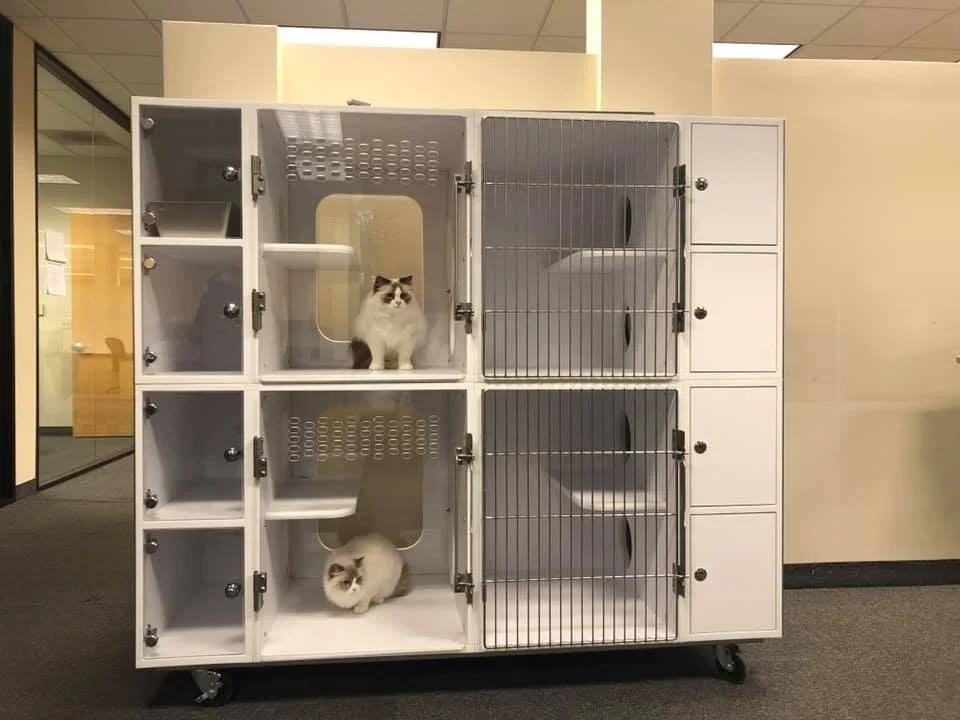
Feline-Friendly Housing Starts with Cat-Only Cages
If you’ve worked in a veterinary hospital for more than five minutes, you already know a cat’s experience the hospital very differently from dogs.
To us, it’s a routine appointment…
To a cat, it’s a sensory overload: new smells, unfamiliar sounds, barking dogs, restraint by strangers, and a total loss of control.
By the time many feline patients reach treatment or recovery, they’re already operating in fight-or-flight mode.
That’s where cat-only cages come in—and why they’re far more than a “nice to have.”
Stress Isn’t Just Emotional, It’s Clinical
Stress in cats doesn’t just look like hissing or hiding in the back of the cage. It shows up in measurable, clinically relevant ways:
Elevated heart and respiratory rates
Increased blood pressure
Stress-induced hyperglycemia
Masked pain or illness
Delayed recovery post-procedure
When cats are housed next to barking dogs or in high-traffic treatment areas, their stress levels remain elevated longer, which directly affects diagnostics, anesthesia recovery, and overall outcomes.
A calmer cat is a more accurate patient.
Cat-Only Cages Create a Quieter, More Predictable Environment
Dedicated feline housing helps reduce:
Noise exposure from dogs
Visual stressors (direct line of sight to other animals)
Vibrations and constant movement
Even small changes, such as raising cat cages, using solid dividers, or dedicating a separate bank of cages, can significantly improve a cat’s perceived sense of safety.
And when cats feel safer, they typically:
Eat sooner
Recover faster
Require less chemical restraint
Are easier (and safer) for staff to handle
Better for Cats = Better for Your Team
Let’s talk about your staff for a moment. Handling a highly stressed or fractious cat increases:
Bite and scratch injuries
Emotional fatigue and burnout
Time spent on restraint rather than care
Cat-only cages reduce the number of “on-edge” feline patients, which means:
Safer handling
Smoother treatments
More efficient workflows
That adds up, especially in busy hospitals where every minute and every staff injury matters.
Clients Notice More Than You Think
Cat owners are already anxious about bringing their cat in, often delaying care because they don’t want to stress them out.
When clients see:
A quiet feline-only area
Thoughtful cage placement
A team that clearly understands cat behavior
…it builds immediate trust.
This aligns closely with Fear Free and Cat Friendly Practice principles, but even outside of formal certification, dedicated feline housing sends a clear message:
“We understand cats, and we’ve designed our hospital with them in mind.” That perception influences client loyalty and compliance.
It’s About Intention, Not Square Footage
You don’t need a full feline-only ward to make a difference. Many hospitals successfully start with:
A designated cat-only cage bank
Physical barriers between cat and dog housing
Covered cage fronts for visual security
Separate recovery cages for feline patients
The Bottom Line
Cat-only cages improve:
Patient stress levels
Diagnostic accuracy
Recovery times
Staff safety
Client confidence
Feline care deserves the same thoughtful consideration we give to anesthesia protocols, imaging equipment, and surgical tools. Because when your patients feel safer, everyone wins.