

Why Cat-Specific Cages Matter in Rescue Facilities (More Than You Might Think)
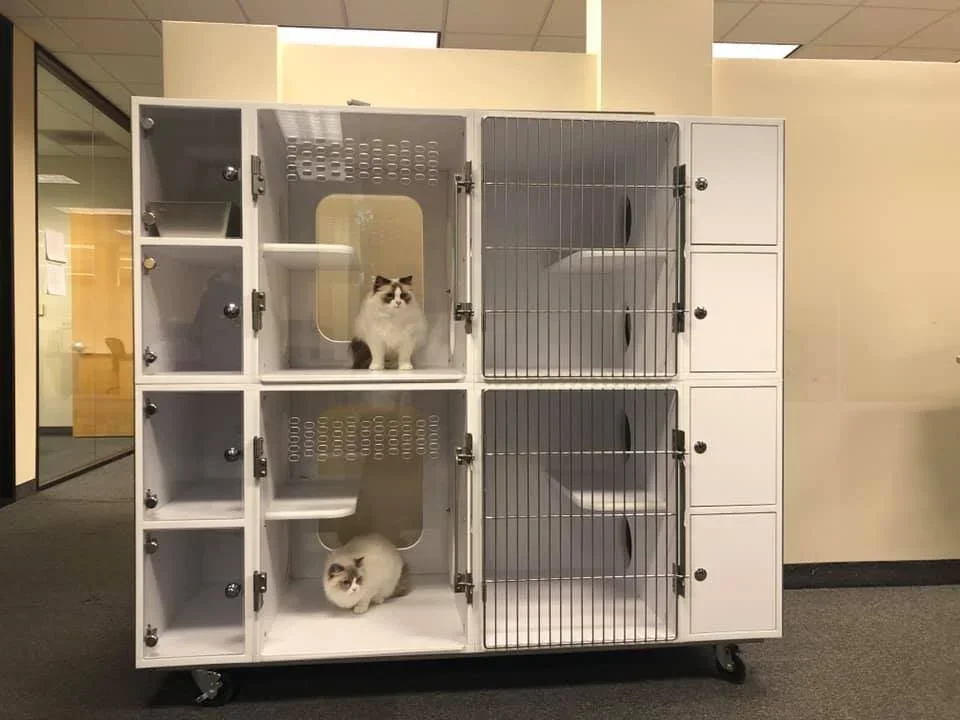
The goal of a cat rescue isn’t just to provide a home for these furry creatures; it’s to help them heal, decompress, and to help them get adopted by a loving family.
Rescue environments are full of good intentions and hard realities, such as limited space, high intake, unknown medical histories, and cats arriving stressed, scared, or shut down. In that setting, the type of cage system you use can quietly make—or break—everything that follows.
Cat-specific cage systems give cats the best possible chance to recover, socialize, and move on to a permanent home.
Stress Is Often the Biggest Barrier to Adoption
Many rescued cats don’t show their true personalities right away. Instead, stress takes over.
You see it as:
Hiding in the back of the cage
Refusing food
Aggression or shutdown behavior
Over-grooming or stress-induced illness
When cats are confined in cages not designed for feline behavior, stress compounds quickly. Loud noises, lack of vertical space, no separation between litter, food, and resting areas—it all sends the same message to the cat: “You’re not safe here.”
A cat-specific cage system helps change that narrative.
Cats are territorial and routine-driven animals. When a cage respects those instincts, cats settle faster. Cat-specific systems typically allow for:
Separate zones for litter, food, and rest
Vertical space so cats can perch or retreat upward
Visual barriers to reduce overstimulation
Easy-to-clean surfaces that minimize lingering stress pheromones
These design elements reduce cortisol levels, which directly impacts appetite, immune function, behavior, and sociability.
Recovery and Behavioral Assessment All Improve
Rescue facilities juggle multiple stages of care at once:
Intake and quarantine
Medical treatment or recovery
Behavioral observation
Adoption readiness
Cat-specific cage systems make it easier to do things like:
Monitor eating, litter use, and demeanor
Perform daily care without escalating fear
Identify real behavioral issues versus stress responses
When cats aren’t constantly in survival mode, staff and volunteers get a more accurate picture of who that cat really is. Allowing their personality to really shine through.
Better Cages Support the Humans, Too
Rescue work is emotionally and physically demanding. Cat cages not only benefit those being housed in them, but also those who are maintaining that space by:
Reducing the risk of bites and scratches
Allowing for easier spot-cleaning and full sanitation
Improving workflow during feeding and medication rounds
Making daily care less stressful for staff and volunteers
When cats are calmer, the people caring for them feel the difference, too.
Adoption Outcomes Improve
Potential adopters are drawn to cats who:
Are visible and relaxed
Show curiosity or social interest
Aren’t crouched in fear at the back of the cage
A cat cage system helps cats present their best selves. It doesn’t change who they are—it simply removes the barriers that keep their personalities hidden. That leads to:
Shorter length of stay
Higher adoption rates
Better matches between cats and adopters
It’s Really About Compassion, Not Perfection
No rescue has unlimited resources. And no cage system can fix everything.
But choosing a cage system designed specifically for cats sends a powerful message to the animals, your team, and your supporters: “We understand cats, and we’ve built our care around them.”
That intention alone can transform a rescue space from a holding area into a place of healing.
In rescue work, every small improvement matters. And few changes have as wide-reaching an impact as giving cats a space that truly meets their needs.