

Top Features of Poskom X-ray for Mobile Veterinarians

Call: 877-545-1202
If you want to take an X-ray anywhere, a battery-powered generator is an excellent option.
The Poskom-powered portable X-ray generator offers the ultimate portability, making it a popular choice among mobile practitioners.
Capture X-ray Images Anywhere
Since the Poskom VET-20BT is cordless with long battery life, you’re not limited to an external power source during the course of your daily practice or on-call shifts.
That means that as an equine practitioner, you can conveniently use the machine in a barn or out in the field, without a power outlet nearby.
And as a small animal veterinarian, you can easily port your x-ray equipment with you—which is perfect for mobile practitioners.
No Cord, No Fuss
The Poskom battery-powered portable X-ray generator is cordless, which means it takes less time for you to set up for a procedure and then pack everything up again.
No cord also means no chance of anyone tripping over the cord or of patients becoming entangled.
Wireless Technology
In addition to the power supply without a cord, the Poskom VET-20BT also uses wireless communication between the generator and the plate.
Radio-frequency (RF) communication enables images to be captured without a wire between the generator and the DR interface.
Lightweight and Compact
The generator is only 36 x 20 x 17 cm (approximately 14 x 8 x 7 inches), and weighs merely 6.8 kg (15 pounds). This makes it the lightest, most compact battery-powered generator on the market.
If you’re short on storage space or need to carry your equipment all day, a compact, lightweight unit can really make your life easier.
Long Battery Life
With one full charge of the high-capacity lithium-ion battery, you get up to 300 exposures—which means you shouldn’t have to deal with a battery running low right when you need it!
For easy battery monitoring, the Poskom x-ray generator also features an energy balance indicator (so you know when to charge the battery) and an LED indicator for when the battery is fully charged (which usually takes just 2-3 hours).
And should you need to replace the battery (its lifecycle is over 5 years, with no maintenance required), you’ll find the process simple and easy.
High-Frequency Technology Means Good Quality
The compact Poskom VET-20BT features advanced high-frequency technology with 20 mA and 90kV capabilities.
High frequency means a strong power output, with stable/repeatable settings for consistent, high-quality images.
So you receive excellent images with fewer retakes.
Easy to Use
In addition to being lightweight, compact, and cordless, the Poskom battery-powered portable X-ray generator is simple to use, with the option of programming your favorite settings so you don’t have to adjust the settings every time.
The collimator features a dual laser alignment system and a push-button light with a 30-second timer.
The Poskom portable X-ray generator is cordless, lightweight, and easy to use. Capture clear images fast with wireless tech and long-lasting battery life

If taking an X-ray anywhere, without the need for electricity or an external power source, sounds good to you, click here to learn more. - https://newvetequipment.com/generators/tables/poskom-generator-x-ray
The Poskom VET-20BT is available for affordable monthly payments (so it can pay for itself and earn a profit right away with use each month), as well as a 3-year warranty.
Written by: Dr. Tammy Powell, DVM

Midmark vs Dentalaire: Best Dental X-Ray Options for Vets

Midmark Dental X-Ray and Dentalaire Dental X-Ray for Veterinarians
Dental radiography is generally considered part of the standard of care for veterinarians who perform dental cleanings, extractions, and other procedures in their practice.
There are many reasons why dental x-rays are important. Just a few examples include: identifying different types of FORLs to determine the best course of treatment, confirming full removal of all root tips during a difficult extraction, discovering and documenting pathology such as the full extent of damage from periodontal disease and whether the location of a missing tooth is hiding a dentigerous cyst under the gumline.
If you’re new to dental x-rays or looking to replace or upgrade your equipment, here are some important considerations, as well as information on two major equipment providers: Midmark dental x-rays and Dentalaire dental x-rays.
Considerations for Purchasing a Dental X-Ray Unit
Here are a few questions to ask yourself (and discuss with sales reps and colleagues) prior to your purchase…
What equipment do you need? Do you need to purchase EVERYTHING? Or, do you just need a new sensor… a new generator or processer… or new software? If you don’t need an entirely new unit as a whole, purchasing just the pieces you need can save significant money. Just check for compatibility issues if you are purchasing components from a different manufacturer or newer components to pair with older models.
What’s your dental x-ray space like? Do you need a wall-mounted unit or something on a stand? Or even something handheld?
What type of service contract or warranty is provided? What are the ongoing and renewal costs? Is bite damage for sensors covered? And is loaner equipment provided while your equipment is being repaired?
How is the software? Is it user-friendly? Does it provide all the functions you need?
What type of sensor(s) do you need? Are you interested in film, CR (phosphor plates), or DR?
Some practitioners like DR for its speed, but dislike the limited size options and rigidity of the sensors. DR is also more expensive to replace. Film and CR, on the other hand, are generally available in sizes ranging from 0-4, to cover small, medium, and large patients. And CR can still be pretty fast. Opinions and preferences vary, so you’ll need to see what works best for you.
Does your staff know how to take dental x-rays? There’s a learning curve, so ask about training provided by the seller, if available.
Comparing Midmark Dental X-Ray and Dentalaire Dental X-Ray
Midmark and Dentalaire and both excellent providers that offer a wide array of dentistry equipment, including anything you’d need to start doing dental x-rays or update/replace your current equipment.
Here are some of the main selling points advertised by each company:
Generator settings and usability: Both Midmark and Dentalaire note their dental x-ray generators are user-friendly and simple to operate, with intuitive, easy-to-read displays and veterinary-specific options. Both have options to input your own settings or to use pre-programmed techniques. Additionally, Dentalaire notes that exotics and extremity settings are included.
Positioning arm: Both providers claim a well-constructed positioning arm that’s easy to move, with precision braking for preventing drift.
Image quality: Both Midmark and Dentalaire dental x-ray systems are generally well regarded by veterinarians for image quality. Additionally, they each advertise a focal point of 0.4mm for high-resolution images with sharp, clear details.
CR equipment: Midmark and Dentalaire both offer CR sensor plates in all sizes, as well as readers.
DR equipment: DR technology is continuing to evolve!
In fact, Midmark notes that they have the world’s first bite-resistant sensor, and they stand behind it with a 5-year warranty (including one free sensor replacement in case of catastrophic damage).
Dentalaire advertises a sensor that is also resistant to bite damage, especially when paired with their protective boot covering, and they offer a 3-year warranty for upgrades.
For both companies, DR sensors come in both size 1 and size 2.
Software: Both Dentalaire and Midmark have comprehensive and user-friendly software with DICOM capabilities and compatibility with PACS. Midmark advertises that their software integrates with leading practice management systems and offers the ability to enhance images. Dentalaire notes they have customizable patient reports and advanced image comparison available on-screen.
Training: Dentalaire offers four hours of on-site training in dental x-ray positioning. Midmark also offers in-clinic training, and their training is RACE approved for CE credits for both veterinarians and technicians.
Support: Each company offers technical support.
Conclusion
There are several excellent providers of veterinary dental x-ray equipment. Midmark and Dentalaire and two major contenders, and both have great offerings. The one you choose may come down to personal preference.
Consider asking your sales reps or providers for demos, and for references of other veterinarians who have the equipment and can give you the pros and cons they’ve experienced.

Also, ask about any ongoing or additional costs. By having as much information as possible, you can find the equipment that’s the best fit for your individual practice.
Written by: Dr. Tammy Powell, DVM

Nomad Pro 2 Dental X-Ray Generator Benefits Your Practice
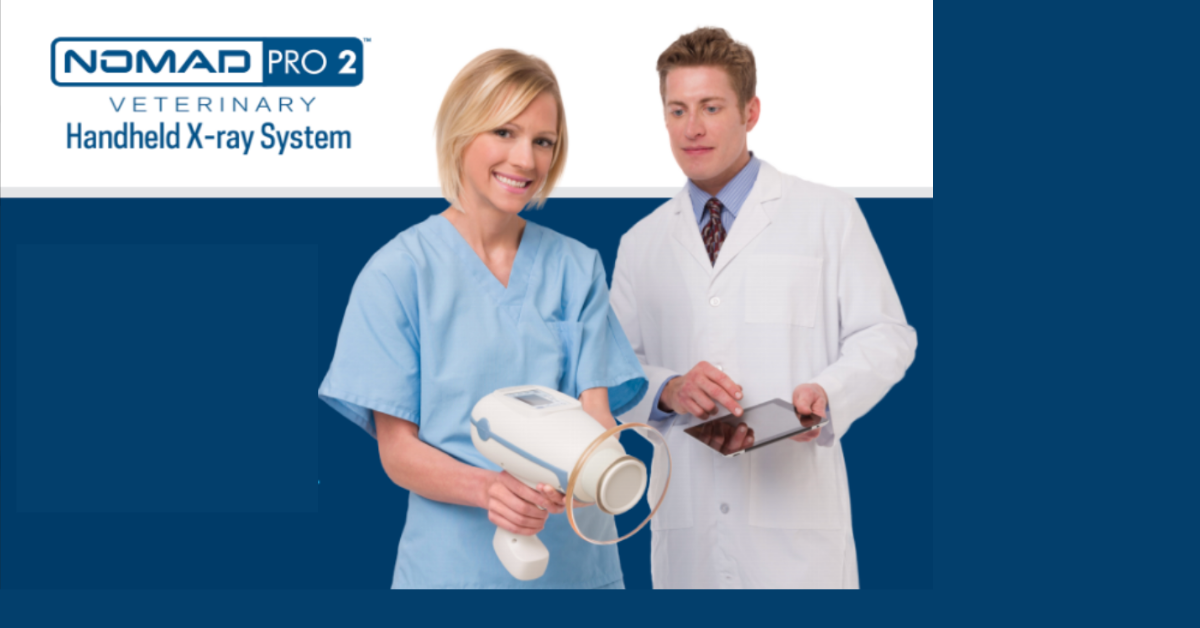
Dental radiographs are an important part of your patients’ dental care. These images allow you to diagnose dental or periodontal pathology, form the best treatment plan, and confirm the successful removal of any extracted teeth.
When it comes to dental x-rays, you have a lot of options in terms of finding a unit that suits your needs and your practice style.
If you’re looking for flexible use and high quality—especially if you’re a mobile practitioner, a practice where space is at a premium, or just like the convenience of a handheld unit—a Nomad Pro 2 dental x-ray generator from Aribex may be right for you.
How Can a Nomad Pro 2 Dental X-ray Generator Help Your Practice?
Every practice has different needs. For example, maybe your practice space or setup dictates the type of equipment that’s best for you. Or maybe the right payment plan, equipment capabilities, or required training for use may help you make your decision.
The following benefits of the Nomad Pro 2 Veterinary dental x-ray generator can meet the needs of many different practice styles and setups…
Simple and convenient operation. The generator is light to hold and easy to operate. Rather than being attached to a cart, a wall, or any other fixed structure, the generator is handheld, weighing merely 5 ½ pounds (2.5kg).
An ergonomic grip and an intuitive, simple display for the settings also allow for ease of use.
Easy setup. There’s no installation or re-wiring required—and no need to renovate your clinic to set up for dental radiographs. With a small, portable unit, you can make any table or space into an effective x-ray station.
Move the unit, not the patient. You can capture images from any angle, even difficult or oblique angles, without excessive repositioning of the patient.
Flexibility for your practice. Capture images anywhere! The cordless, battery-operated unit is suitable for dental, small animal, exotic, and equine use, and for use with film, phosphor plates, and digital sensors.
Location independence. Choose the best spot in your clinic for dental radiographs, without being limited by tight spaces. Handheld units are also ideal for mobile practitioner needs, and the generator may be used outdoors.
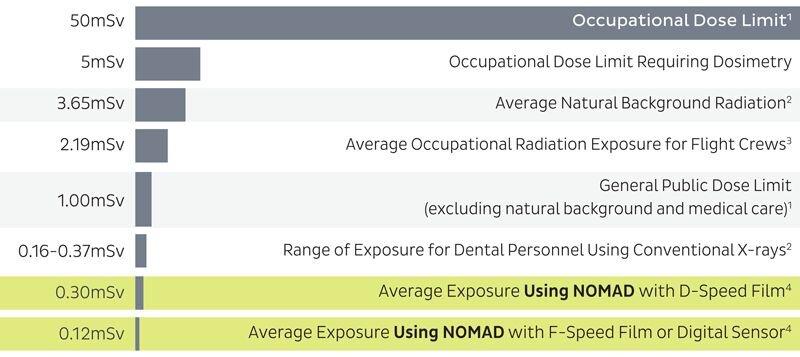
Safety for staff and patients. The unit operates with low radiation exposure.
Compare the annual, whole-body radiation exposure between the Nomad Pro 2 dental x-ray generator and other common exposure scenarios:
Internal shielding (which prevents leakage from the x-ray source) and external shielding (to block backscatter radiation) also contribute to safety, protecting your team from unnecessary radiation exposure.
This also means your team member can stay with the patient while taking x-rays.
Consistently sharp, clear images. Specifications include a 0.4mm focal spot, 60kV DC x-ray generation, and an mA of 2.5. The generator allows your team to quickly capture high-quality images.
Affordability. The easy setup, without major installation, makes it easy to get started. And simple monthly payments mean the generator can pay for itself each month—so you can start making a profit and return on investment right away.
Tips for Getting Started
Use the best financing option for your practice. Low monthly payments mean you can make a profit right away just by using your new generator a couple of times per month.
And if you need an intraoral sensor and software to go with your generator, ask us about an affordable bundle that includes all three.
Protect your investment. Ask about a warranty for your machine.
Invest time informal training. You probably know that new equipment is best utilized if your team feels comfortable using it. By training your team to take all the dental views you need, they’ll be able to comfortably and effectively capture images in a matter of minutes.
Work the cost of dental x-rays into your estimates. Client education can help your clients understand why dental x-rays are so important with any dental procedure. And by including the cost together with your dental procedures (rather than as an “add-on” service), it helps convey that dental radiographs are a necessary part of your patient care plan.

Envision what it would be like to have a quick and easy dental x-ray system in your practice, to help improve patient care and improve your bottom line.
Any questions about how a Nomad Pro 2 dental x-ray generator from Aribex can fit into your practice space, workflow, or budget? Just give us a call or contact us here!


Mental Health and Work-Life Balance for Veterinary Practice Owners

Veterinary medicine can mean a busy schedule and emotional ups and downs.
Unfortunately, recent data suggest that this, along with other factors of daily practice, can take a toll mentally and emotionally.
Plus, as a practice owner, there’s the additional pressure of running a business.
You got into this profession because you love pets and want to help them—and that can make for a very rewarding career.
The trick is finding ways to care for yourself.
This may look a little different for everyone, but here are some popular suggestions that have helped many veterinarians find more energy, wellbeing, and balance…
Set Boundaries
When you love animals, it’s natural to want to help every pet who needs care. But failing to set boundaries can lead to burnout.
In addition to the turmoil it causes in a person’s life, burnout can also interfere with the ability to help pets over the long-term.
Setting boundaries can mean a number of different things, depending on your personal preferences and what your work rules allow. Here are a few suggestions…
Put breaks into your schedule
Giving yourself 5-20 minutes to recharge in the morning and afternoon (in addition to your lunch break) can be immensely helpful during a busy day.
Have clear cut rules for scheduling
For example, is double booking allowed? Can you go to lunch rather than seeing the patient that walks in at lunchtime (assuming it’s not a life-threatening emergency)?
To accommodate these and other scheduling surprises, it helps to leave a few appointment slots open each day—that way, you have enough time for all patients rather than running yourself to exhaustion trying to fit everyone in.
Set boundaries with clients
For example, if you give your phone number out to pet owners, be sure they know when and under what circumstances they can call you.
Or if a client is acting really outrageous and causing stress for all employees, it may be in your team’s best interest to “fire” that client to protect everyone’s time, energy, and morale.
Say “no” sometimes
This might mean coordinating with another doctor at your practice to take over care of your patients on your day off, so that your team isn’t calling you at home unless absolutely necessary.
You deserve to enjoy some days off!
Focus On the Positive
Despite your intelligence, knowledge, and passion, some things are out of your control.
Even with your best efforts, sometimes pets don’t get better—due to the nature of their medical condition, or due to owners not agreeing to the type of care you’d like to provide.
This happens to everyone. And while it’s hard to accept, it may help to focus on all the good memories—all the times you’ve helped pets, all the thank you cards from clients, etc.
Sometimes negative thoughts—whether it’s a client who said something rude or the loss of a patient you care about—dominate our minds. It’s human nature.
But usually, the good days outweigh the bad. It’s just a matter of training our brains to refocus on the positive.
Figure Out What Brings You the Most Fulfillment
Find ways to make your daily work life as enjoyable as possible.
This could mean cultivating relationships with clients.
It could also mean community involvement, such as charity efforts, puppy/kitten classes, or informational talks on pet nutrition or other topics.
Fulfillment may also mean specializing, or being the “go-to” doctor in your practice for specific procedures or medical conditions that you enjoy working with.
Cultivate Joy
In addition to professional fulfillment, it’s important to cultivate joy in your personal life.
This means some type of human connection—whether that’s a partner, friends, or family.
If you’re working long hours, it’s easy to feel isolated. By doing your best to schedule time with people you care about—even just a quick phone call—you may find that your mood lifts.
Additionally, physical activities, hobbies, learning new things, and other pursuits outside of work can remind you that “there’s more to life.”
This makes it easier to reframe a bad day as something that, while hurtful, is probably small in the scheme of things.
Schedule Time to Slow Down
If you need to sleep or binge-watch a show after a tiring week, go for it!
Or find time to read a book, take a bath, or meditate.
In addition to activities that bring you joy, scheduling “slow time” may help you feel centered, recharged, and in control of your schedule.
Seek Out Support
It’s helpful to find caring people who can listen.
Depending on your needs and circumstances, this may include…
Friends and family.
Colleagues you trust.
Veterinary support groups such as…
Vets4Vets®
A confidential support group for veterinarians associated with the VIN Foundation, which includes everything from weekly group discussions to one-on-one support.
Not One More Vet
An online support network of over 20,000 veterinarians with additional resources, including support in finding temporary relief workers for vets who need a few days off.
A therapist or counselor. Nowadays, there are convenient and reasonably priced online services such as Talkspace and BetterHelp.
Sometimes, just venting to someone in a safe, confidential setting can really lift the weight off of a person’s shoulders.
The National Suicide Prevention Lifeline: 1-800-273-TALK (8255), or text 741 741 to speak to a trained crisis counselor.
The Truth About Balance…
The thing about balance is, it’s dynamic, not static.
That means that as you go through different stages of life, your schedule, priorities, and tricks for recharging yourself may change. The key is to be aware and to adjust as needed.

The better you care for yourself, the better you’ll be able to care for pets—and the more joy you’ll get out of your daily work and personal life.
Resources:
Not One More Vet: https://www.nomv.org/
Talkspace: https://www.talkspace.com/
BetterHelp: https://www.betterhelp.com/
The National Suicide Prevention Lifeline: 1-800-273-TALK (8255), or text 741 741 to speak to a trained crisis counselor.
Written by: Dr. Tammy Powell, DVM

Veterinary X-Ray Options: Naomi and CareRay Explained

Comparing X-Ray Panels: Naomi and CareRay
Digital radiography equipment continues to evolve, with several types of x-ray detectors or sensors available to veterinarians.
So, which is right for your practice? Do you need the latest technology to provide the best care, or is it best to get the most mileage you can out of previous generations of technology?
The Evolution of Digital X-Ray Detectors
Just like our cell phones and tablets, maybe it feels like there’s always a new type of x-ray technology available, whether you’re looking for small or large animal x-ray equipment, or for general, mobile, or dental radiography.
When trying to research the technology and all the lingo, maybe the choice feels a bit overwhelming.
To start with the basics, here’s a quick overview of the most common digital radiography plates on the market right now…
CR (computed radiography). CR cassettes are also known as phosphor plates. In terms of practical application, the biggest difference between CR and DR is probably the fact that CR requires an extra step—rather than the image being transferred directly from the plates to a computer, the sensors must be read by the CR plate reader.
DR (direct [capture] radiography). DR technology allows images to be read directly from the plate and then show up on a computer screen, which is usually a rapid process. Within DR, there are two main types of plate technologies:
CCD panels. Charge-coupled device (CCD) detectors are generally built into or attached directly to the x-ray table. This technology has been compared to a digital camera in the way it detects and records light.
Flat-panel detectors. Here, the x-rays are converted into an electrical signal (either directly, or indirectly by first converting x-rays into light and then into an electrical signal). The panel is separate from the x-ray table and can be removed in case a horizontal beam is needed.
The advantages of flat panels include lower x-ray doses and better detail and clarity in the images (although opinions on image quality vary amongst practitioners). On the other hand, flat panels tend to cost more than CCD panels.
Note: The abbreviation DR is also used for “digital radiography” in general, in addition to direct capture panels.
Additional X-Ray Equipment Considerations
In addition to the detector that picks up the x-ray beam, successful radiographs also require…
An x-ray generator, which produces the x-ray beam. This may be purchased as part of a new digital x-ray system. Or, older generators and tables may be retrofitted to be compatible with a new digital sensor.
Software. This is what shows the x-ray image that was picked up by the sensor so that a veterinarian can see and read the image. It’s also where images are stored as part of the medical record, or shared electronically with clients, other veterinary clinics, or specialists as needed.
Wired or wireless technology. So far as the sensor or plate goes, some have wire connections while others are wireless.
In addition to considering which sensor technology is a good fit for your practice, it’s important to think about whether or not any other equipment needs to be upgraded, and how compatible the whole system will be together.
When Is It Time to Upgrade?
This depends a bit on a veterinary practice’s needs. Typically, it’s not necessary to replace equipment for the latest model every time new technology is available, and it may be possible to keep older equipment in good working order for many years.
Using the Naomi CCD panels and CareRay Cesium (DR) panels as an example, here are some considerations…
If a clinic is using older Naomi CCD panels that are still producing great, diagnostic images, then it’s typically not necessary to upgrade to a flat panel detector.
The veterinarian is not missing out by hanging onto older technology that still gets the job done.
What if the plates work fine but there’s a software problem—say, the software is no longer supported? Or, what if there’s no longer any technical support or a warranty available for the plates, which sometimes happens with older technology?
Here, the decision to upgrade may come down to personal preference, budget, risk tolerance, and how much time and effort it takes to get readable images from the software.
Of course, if the panels are no longer producing diagnostic images, then it’s probably time to upgrade.
You can always check on your warranty if it’s still in place or ask about the cost of repairs, but sometimes veterinarians find that repairs are costly on older technology and their investment may be better spent on an upgrade. But this strategy will vary depending on each individual business and situation.
No matter which equipment you are currently using (or considering purchasing), remember to also think about things such as availability and cost of technical support, whether a loaner plate is available during repairs, and how the software integrates with your practice software.
Also, see if you can sell your used equipment (or make a trade-in, if your vendor allows) to offset the costs of new equipment.

All of these factors will aid in the decision of whether or not it’s time for an upgrade.
Written by: Dr. Tammy Powell, DVM
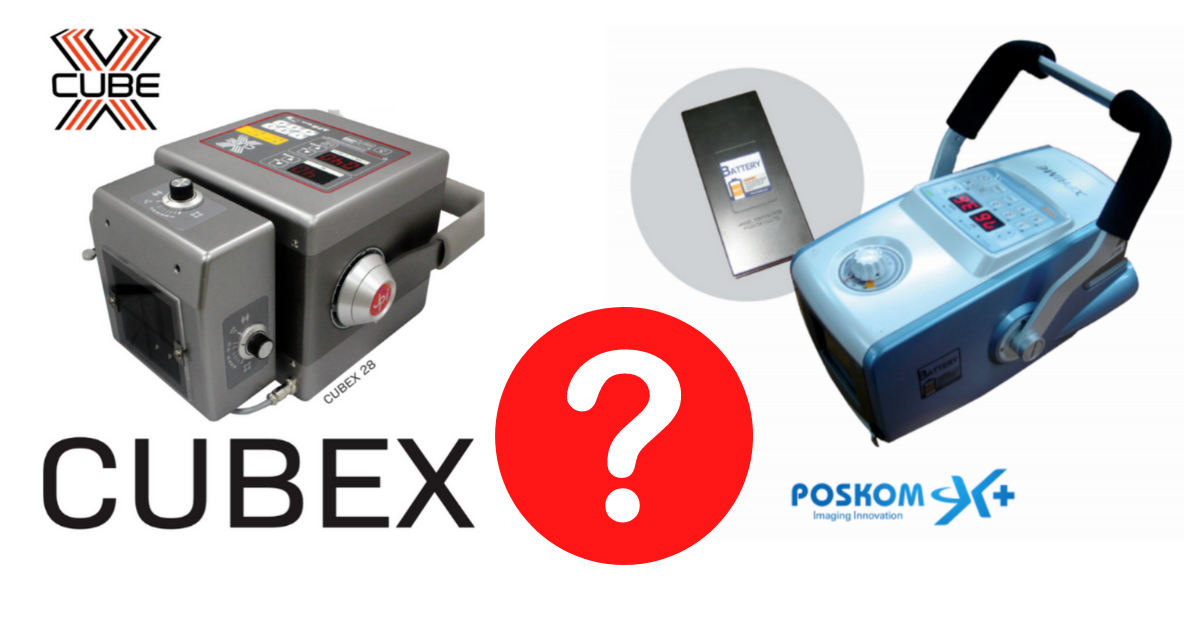
Portable Equine X-Ray Generators: What’s Better, Plug In Or Battery Powered?

Plug-In Or Battery Powered?
As an equine practitioner, many of your daily practice needs are different from those of your small animal colleagues.
Maybe you meet your patients where they are, in a barn or on a farm call. Or, even if you have a facility that allows for equine visits and hospitalization, you may still need portable equipment to bring with you into a stall.
So, which type of portable generator is best for you: plug-in or battery-powered? Here are some things to consider…
Benefits of Battery Powered Portable Equine Generators
One obvious advantage is that a battery-powered generator may be easier to use out in the field, for the simple fact that you’re “wireless” and thus not dependent on a power outlet. This may be especially helpful in situations where power outlets are not immediately accessible, during power outages in inclement weather, or in some barns or other locations where the power supply may be less consistent.
The lack of a cord also allows for simpler mobility during use. There’s no need to untangle a cord and no possibility of tripping over the wire at any point during the procedure.
Benefits of Plug-In Portable Equine Generators
The most common reason for equine practitioners to choose a plug-in generator is probably this: They don’t want the battery to run out!
Nowadays, there are battery-powered generators available that have long battery life. However, depending on how many hours you’re out, a battery may or may not meet your needs. Or, a team member may forget to charge it between shifts. Also, some practitioners note that battery life may decrease over time—and that the batteries of an x-ray generator can be very expensive to replace.
Additional considerations mentioned by some veterinarians are that plug-in generators may weigh less than battery-powered units. Also, plug-in units may cost less on average. There are variations in weight and equipment cost from model to model, though.
Other Considerations
Different brands and models may offer different price points, battery/equipment expected lifespan and other important differences. Doing research before a purchase is crucial.
This includes talking to the company, as well as speaking to colleagues for recommendations (ask companies for referrals to other practitioners in your area who use the equipment or ask around in online forums or in-person events).
In addition to the equipment itself, you’ll also want to consider things like warranty, ongoing costs (repair and service costs, and image storage costs for digital), integration with any of your current equipment (for example, if you already have a plate), ease of use, durability in rugged conditions or temperature extremes, and whether 24/7 live technical support is available.
With all this in mind, different veterinarians may have different preferences—there’s no one size fits all in terms of plug-in versus battery-powered portable equine generators, or in terms of a particular brand and model that are best for everyone.

So be sure to do your research and gather feedback from colleagues, but also think about what will work best for your own preferences and individual practice needs.
Written by: Dr. Tammy Powell, DVM