
From Brick-and-Mortar to Mobile: Could a Mobile Practice Be Your Next Chapter?
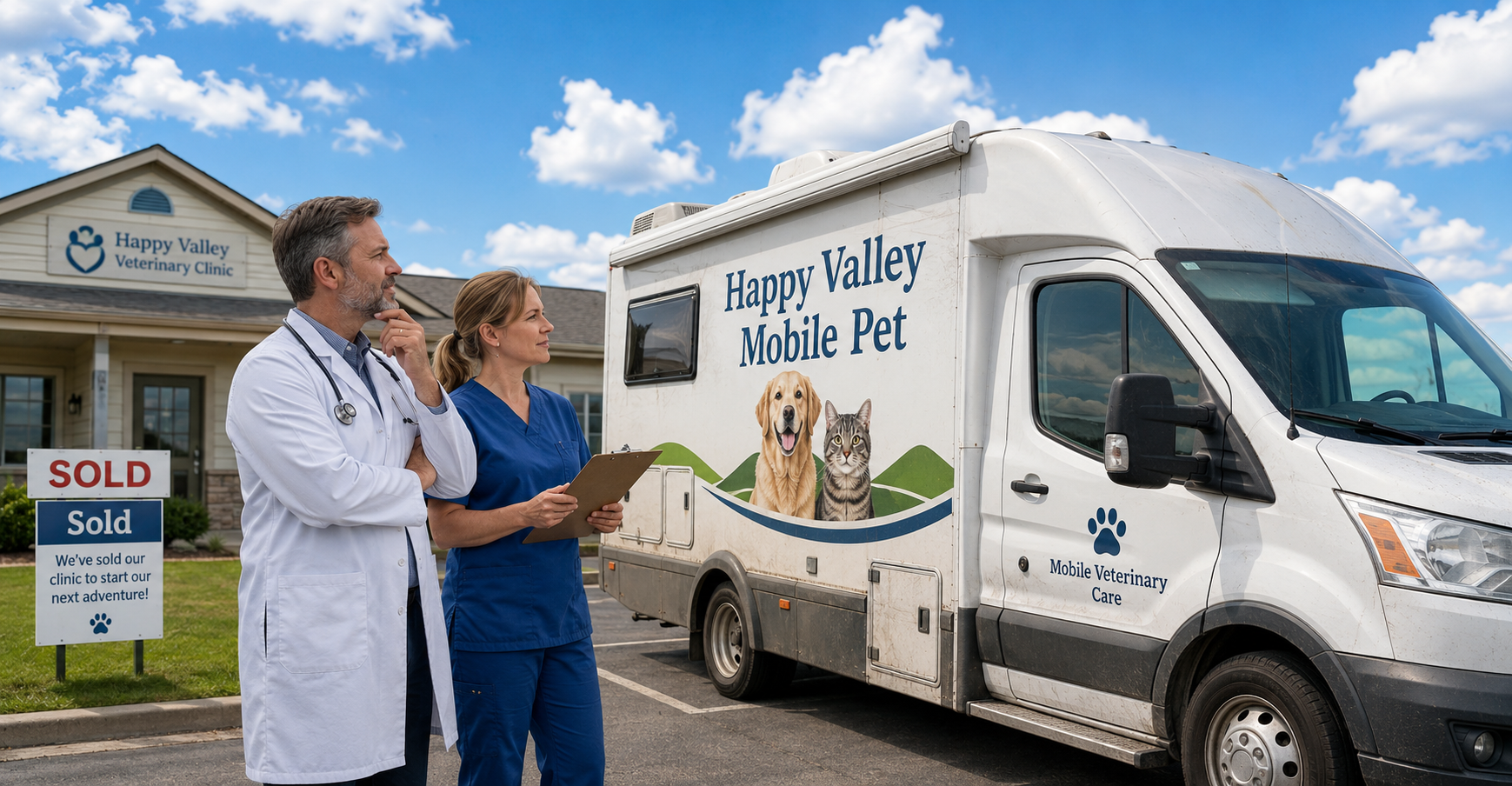
For many veterinarians, owning a brick-and-mortar practice is the goal. But eventually, some practice owners reach a point where they no longer want to manage an entire hospital.
Selling a veterinary clinic doesn't necessarily mean retiring from veterinary medicine.
In fact, selling the hospital may open the door to a completely different, and potentially simpler, way to continue practicing.
A mobile veterinary practice can allow you to continue practicing medicine while leaving behind many of the responsibilities that come with running a traditional veterinary hospital.
For a veterinarian who still loves the medicine but has grown tired of managing the business, going mobile may be worth considering.
You Don't Have to Retire to Sell Your Practice
Practice ownership comes with plenty of rewards. It also comes with a long list of responsibilities.
- Payroll
- Staffing challenges
- Building maintenance
- Equipment repairs
- Inventory management
- Scheduling
- Administrative work
- Employee management
After years of managing all those moving parts, you may eventually ask yourself:
What if I could keep doing the part of veterinary medicine I enjoy without having to run an entire hospital?
That's where a mobile practice can become an interesting second chapter.
Instead of maintaining a commercial building and managing a large team, you may be able to create a smaller, more focused practice built around the clients and services you enjoy most.
The Financial Picture Can Look Very Different
A mobile practice doesn't eliminate business expenses, but it can significantly change the financial structure of your practice.
Without a traditional hospital, you may no longer have a commercial lease or many of the building-related expenses associated with a veterinary facility.
You may also need fewer employees, or potentially no employees, which can reduce payroll and administrative responsibilities.
That doesn't mean going mobile is automatically more profitable. You'll still need to budget carefully for expenses such as:
- Vehicle payments or purchase costs
- Fuel and vehicle insurance
- Veterinary equipment and medical supplies
- Technology and communications
- Licensing
- Vehicle and equipment maintenance
- Other operating expenses
But the overall business can be significantly simpler.
For some veterinarians, that simplicity may be worth as much as the potential financial savings.
Your Existing Clients May Be Your Best Starting Point
If you've spent years building a successful veterinary practice, you already have something many new mobile veterinarians have to work hard to establish:
Trust.
Your existing client relationships may provide a strong starting point for your new practice model.
Let clients know about the transition early and clearly explain what will, and won't, change.
Some clients may actually prefer the convenience of having their veterinarian come to them, particularly for:
- Wellness visits
- Senior pets
- Anxious pets
- End-of-life care
You can also establish referral relationships with nearby veterinary hospitals for services you don't plan to provide, such as advanced diagnostics, surgery, hospitalization, or emergency care.
Don't Underestimate the Logistics
A mobile veterinary practice sounds simple until you begin planning the daily schedule.
A traditional hospital may be able to see several patients simultaneously. A mobile veterinarian generally can't.
Every appointment needs to account for:
- Travel time
- Traffic
- Cancellations
- Unexpected case complexity
- Geographic distance between clients
These factors can quickly disrupt an overly ambitious schedule.
Before making the transition, determine how many appointments you can realistically complete each day while still providing the level of care your clients expect.
The goal shouldn't be to squeeze the maximum number of appointments into the day. The goal should be to build a schedule that's sustainable for you and dependable for your clients.
Your Mobile Unit Becomes Your Hospital
In a traditional clinic, your infrastructure is largely fixed.
In a mobile practice, your vehicle and your equipment become your veterinary hospital.
That makes equipment reliability particularly important.
Depending on the services you plan to offer, your mobile practice might include diagnostic and treatment equipment such as:
- Veterinary ultrasound and portable digital radiography
- Veterinary anesthesia equipment and patient monitoring
- Infusion pumps
- Laboratory equipment
- Refrigeration and appropriate medication storage
The right equipment will depend heavily on your scope of practice and the types of cases you plan to see.
And Don't Forget the Vehicle
Your mobile veterinary vehicle is also one of the most important pieces of equipment in the business.
Budget for routine maintenance, unexpected repairs, tires, batteries, generators or electrical systems, and the possibility that the mobile unit could temporarily become unavailable.
A contingency plan for vehicle or equipment failure is essential.
A Different Kind of Retirement
For some veterinarians, the decision isn't simply between working and retiring.
There's a third option:
Work differently.
Selling a brick-and-mortar veterinary practice can provide an opportunity to step away from management responsibilities while continuing to practice medicine on your own terms.
A mobile practice can potentially provide:
- Fewer employees to manage
- Lower overhead
- More control over your schedule
- A smaller and simpler business
- More time practicing veterinary medicine
A mobile practice won't be the right choice for everyone.
But for a veterinarian looking for a simpler, more flexible second chapter, leaving the building behind doesn't necessarily mean leaving veterinary medicine behind.
Sometimes, it simply means taking the practice with you.