

5 Ways to Use a Veterinary Surgical Instrument Table in Your Practice
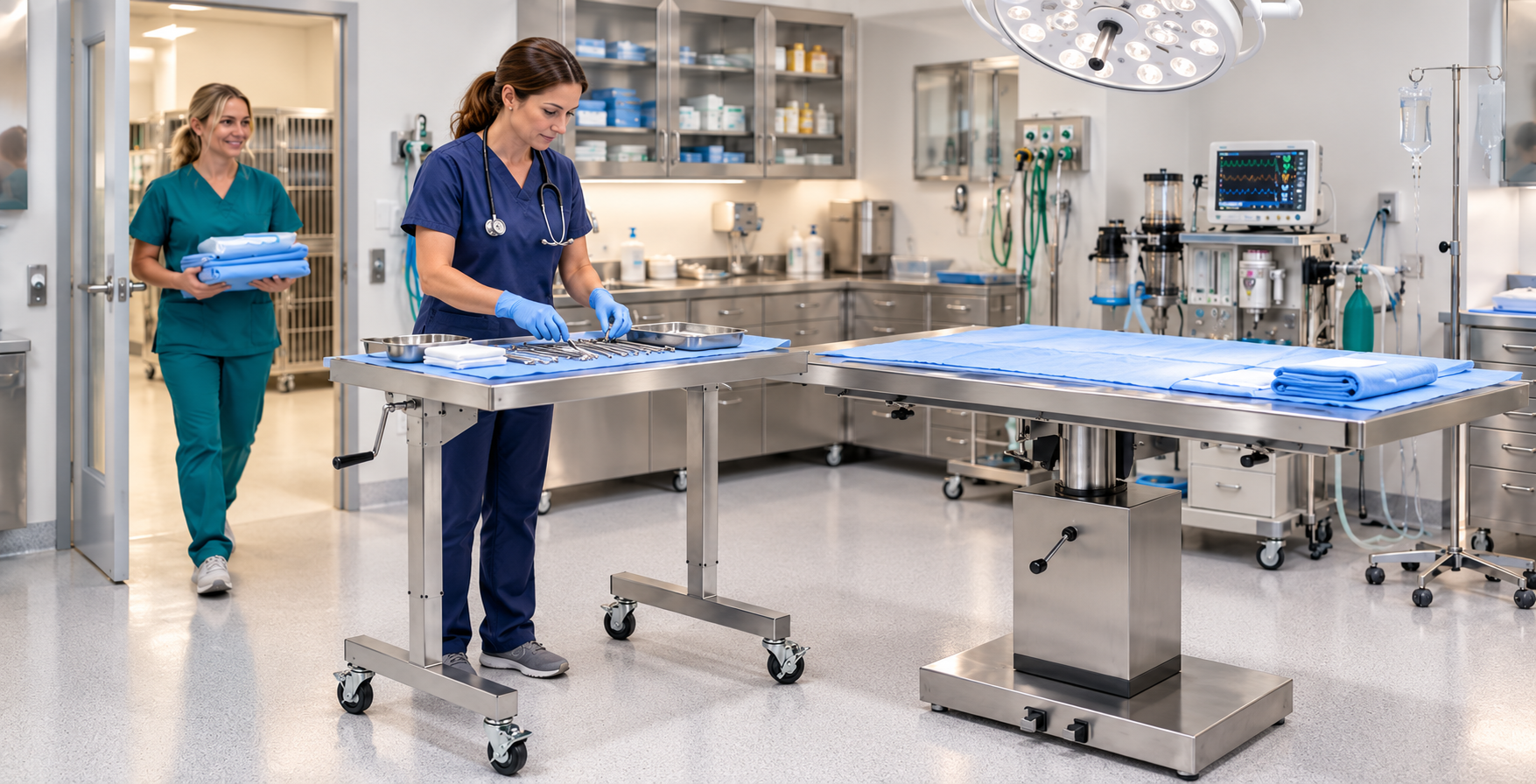
A well-organized surgical suite helps your veterinary team work efficiently and keep essential instruments close at hand.
When you're preparing for surgery, having the right instruments is only part of the equation. Where you place those instruments, how easily your team can reach them, and how well your surgical suite is organized can all influence the flow of a procedure.
A veterinary surgical instrument table offers a practical way to keep essential tools and supplies within reach.
Whether your practice performs routine spays and neuters, soft tissue procedures, or more complex surgeries, a versatile piece of equipment can help you create a more organized workspace.
Featured Equipment: Suburban Surgery Instrument Table
The Suburban Surgery Instrument Table is designed with this in mind.
It has an adjustable-height stainless steel surface, a mobile base, and a raised back rail for easy access to instruments and equipment during procedures.
5 Practical Ways to Use a Veterinary Surgical Instrument Table
Keep Surgical Instruments Organized and Within Reach
During a surgical procedure, the last thing you or your team needs is to waste time searching for an instrument. A dedicated instrument table gives your surgical team a designated place to organize the tools needed for the procedure.
Depending on the surgery, the table can accommodate instrument trays, clamps, scissors, forceps, and other essential supplies.
Arranging instruments in a consistent, easy-to-follow layout helps the team anticipate what the surgeon needs next and keeps the procedure moving smoothly.
Practical Tip: Establish a setup routine that works for your team. And make it repeatable.
Organize instruments by procedure, keep frequently used items accessible, and maintain the sterile field throughout surgery.
Create a More Efficient Surgical Workflow
When instruments and supplies are close to the operating table, veterinary teams can focus more on the patient and the procedure.
The Suburban Surgery Instrument Table can be positioned next to or over part of the surgery table, depending on your setup.
This flexibility makes it easier to arrange your workspace around the surgeon's and surgical team's needs.
For busy practices performing multiple procedures throughout the day, small workflow improvements can really add up.
Of course, the table is just one part of an efficient surgical workflow. Clear communication, appropriate preparation, and established cleaning and sterilization protocols remain essential.
Adjust the Work Surface to Suit Your Team
Veterinary teams come in all shapes and sizes, and not every procedure calls for the same working position. A table that sits too high or too low can make it harder to stay comfortable during a lengthy procedure.
The Suburban Surgery Instrument Table offers a height range of 39 to 62 inches, adjusted using a hand crank accessible from either side.
This lets team members position the work surface to suit their needs and the surgical suite layout.
When planning your setup, consider the height of your primary surgery table, the surgeon's reach, and the space needed for other equipment.
Keep in Mind: The goal is to create a workspace that supports comfortable access without obstructing the surgical team or compromising sterile technique.
Make Better Use of Your Surgical Suite
Space is often at a premium in veterinary practices. Between anesthesia machines, monitoring equipment, patient warming systems, and instrument trays, even a well-designed surgical suite can feel crowded.
A mobile instrument table gives your team more flexibility when arranging the room.
With its 40-inch-wide by 23-inch-deep tabletop, the Suburban Surgery Instrument Table provides room for instruments and supplies without requiring a permanent workstation.
You can reposition the table as needed and move it out of the way when the procedure is complete.
For practice owners planning a surgical suite update, this flexibility is worth considering.
Before You Buy: Measure your surgical area and confirm that the table's dimensions and base clearance work with your existing equipment.
Support a Clean, Professional Surgical Environment
Maintaining a clean surgical environment is fundamental to veterinary patient care.
The Suburban Surgery Instrument Table is constructed entirely from Type 304 stainless steel.
Stainless steel is durable and compatible with many routine cleaning practices when you follow the right products and procedures.
The table also features a raised back rail designed to help prevent equipment from accidentally sliding off the rear of the work surface.
Choosing the Right Surgical Instrument Table for Your Practice
When evaluating a surgical instrument table, think beyond its basic function.
Consider these three important questions:
- How does your surgical team typically perform procedures?
- Which instruments and supplies need to remain accessible during surgery?
- How will the instrument table fit alongside your existing equipment?
A surgical instrument table may not be the most prominent piece of equipment in your surgical suite, but it plays an important supporting role.
Keeping instruments accessible, adapting the workspace to your team, and using available space more effectively can help create a more organized surgical environment.
Looking for a Better Surgical Suite Setup?
The Suburban Surgery Instrument Table may be a practical addition to your veterinary practice.
Explore the equipment details and contact Brad Haven, Jr. with questions about your surgery equipment needs.


investing in Right Veterinary Stainless Steel Surgery Table
Most general and emergency veterinary practices perform surgeries on a regular basis. However, there are variations in the types of patients they see and the types of surgeries they perform.
When purchasing a new or used veterinary surgery table, there are a lot of options. A veterinarian or practice owner may feel overwhelmed for choice.
It’s important to ensure your surgery suite and table meet all state veterinary regulations. Outside of that, here are some factors to consider when purchasing your surgery table…
Your Practice’s Surgery Needs and Goals
Veterinary surgical tables range in size from about 3.5 feet long to 5 feet long. Practices that see large dogs might need the longest possible table, whereas a feline-only practice with a compact surgery suite might consider a smaller table.
For a practice that performs multiple surgeries per day, it might make sense to invest more money in a higher-end table with lots of bells and whistles. On the other hand, a slower practice with less of a focus on surgeries might be perfectly happy with a basic, simple surgery table.
These are just a couple of examples of differing needs between different veterinary practices. To determine your hospital’s needs, think about the types of patients you see, the types of surgeries your doctors perform, and how often surgeries are done.
Also, consider the goals for your clinic—and whether your surgery needs may change over time as your practice grows.
Veterinary Surgery Table Features
Veterinarians purchasing a surgery table have a lot of options to choose from. Here are some common and popular features to consider…
Stainless steel. Veterinary operation tables that are all stainless steel are popular due to their durability and ease of cleaning.
Lift function. Adjustable table height is important since veterinary patients come in different sizes and veterinary surgeons come in different heights. Lift capabilities ensure each surgeon can adjust the table to a comfortable height, whether they are sitting or standing. This feature is typically available as either hydraulic or electric. It might be operated via a foot pedal, hand crank, or other methods.
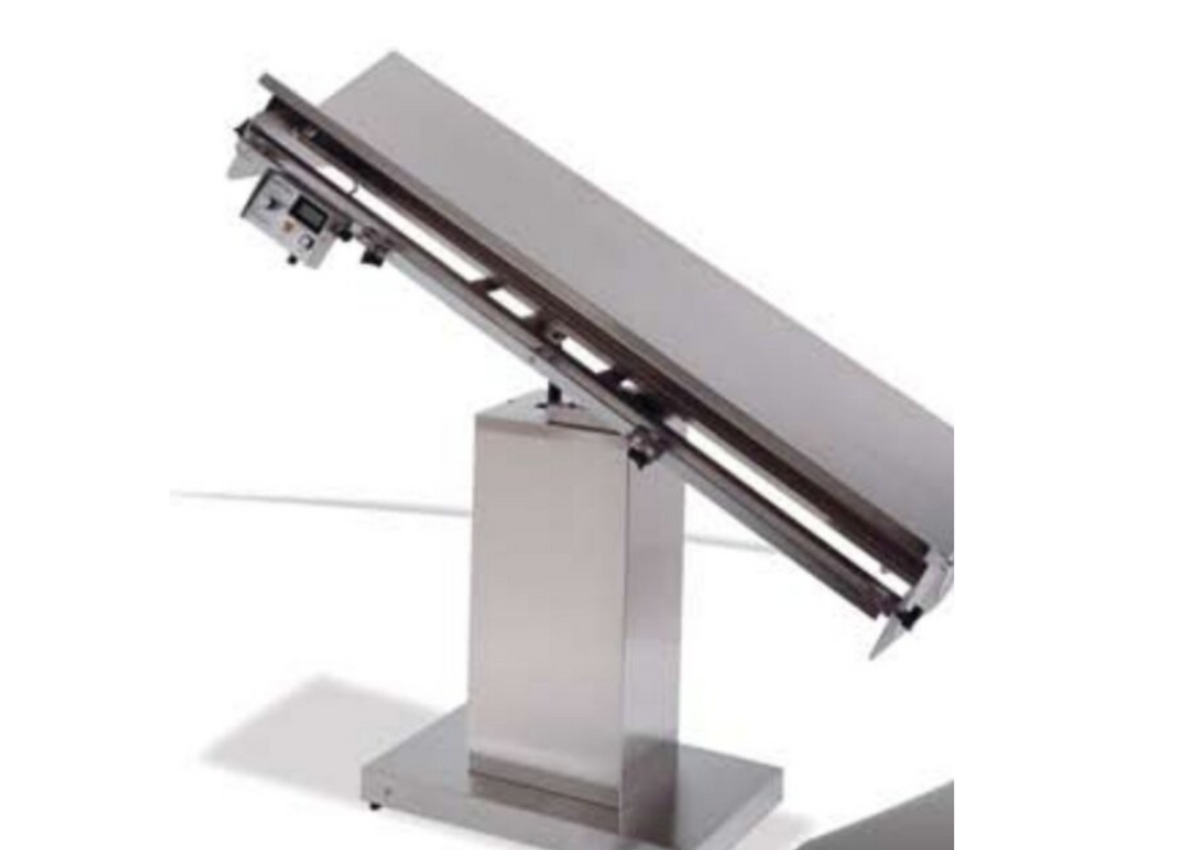
V-top versus flat-top. Flat-top means the table is one solid piece. A V-top or V-style table, on the other hand, is composed of two adjustable panels with a trough in the middle that can also help with fluid drainage. These panels can lie flat, or they can be raised to form a “V” shape to help hold patients in place. They can also be adjusted at different angles to tilt the patient if needed.
Tilting abilities. Some tables come with the ability to tilt forward and backward, or to tip laterally right or left—or both. These functions can make surgery a lot easier in many cases. For example, tilt is a useful function for many types of abdominal surgeries to help with fluid drainage or moving organs via gravity for easier access and visibility.
Heated table. Some veterinarians like a heated table, while others worry about burns and/or prefer to use other methods to keep the patient warm. There is no right or wrong answer—just make sure you know how the heating feature functions on your table, including how to monitor or adjust the warmth. With safety in mind, a veterinary surgical table heater can be a very convenient way to help keep patients warm, especially during longer procedures.
Easy adjustments. The table may need to be adjusted mid-surgery. This should be smooth and easy to do without risking patient safety due to sudden changes in height or tilt. The table should also lock into the desired position after adjustments are made.
Attachments, ties, rails, etc. In addition to v-top and tilt features, think about how you will position and restrain the patient. Make sure all basic features such as holds or cleats for the ties are included. Some tables also feature add-ons like attachable buckets to collect draining fluids.
Financial and Purchasing Considerations
Average veterinary surgery tables can run from about $3,000-$10,000, depending on features and other factors. But a good surgery table is generally considered a good investment. Quality stainless steel means the table can last for years. Plus, the table facilitates revenue from surgical procedures.
That being said, it’s important to have a financial plan for any new piece of equipment (whether that’s a totally new table, or a “new to you” used veterinary surgery table). Consult a financial or veterinary business expert on the best plan for financing your purchase, increasing your ROI, and factoring in tax savings.
Also, remember to think about warranty, repair, and maintenance costs—with repairs often being related to lifting components rather than the table itself.

Some research and planning can help ensure that a new surgery table is a great investment to further your practice’s patient care and financial goals.
Written by: Dr. Tammy Powell, DVM