

5 Veterinary Dentistry Cases Every Practice Should Know
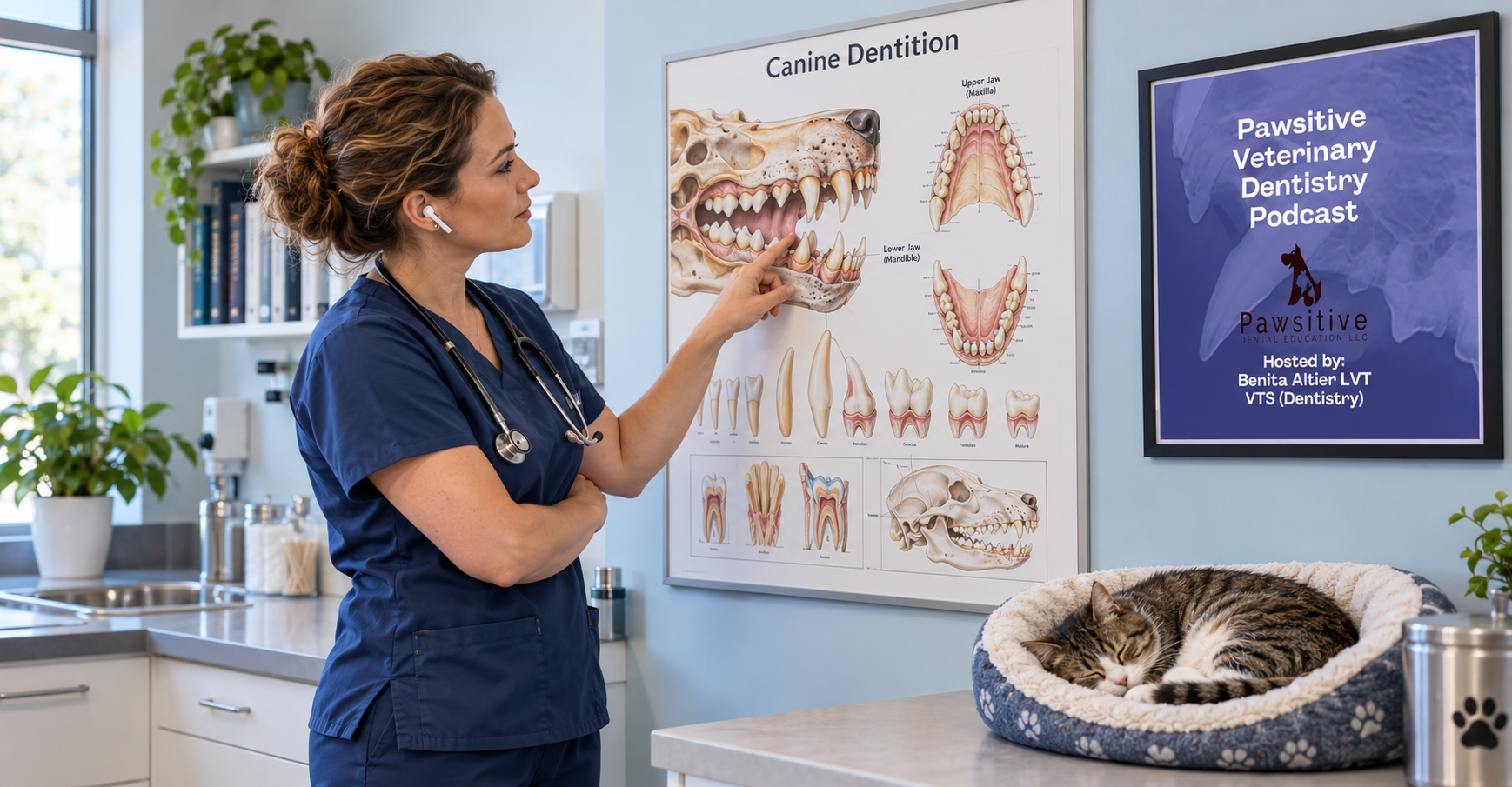
Veterinary dental cases don’t always come with straightforward answers. A fractured tooth in a young dog, an oral mass that looks harmless, or a cat with chronic gingival inflammation can each raise important questions about diagnosis, treatment, pain management, and when referral is appropriate.
These cases are also opportunities for veterinary teams to sharpen clinical skills and broaden how they approach oral health.
The Pawsitive Veterinary Dentistry Podcast, hosted by Benita Altier, LVT, VTS (Dentistry), takes a case-based approach to veterinary dental education. Episodes feature conversations with veterinary dental specialists and experienced technicians, connecting evidence-based information with practical considerations teams encounter in everyday practice.
Let’s explore five complex dental topics and the clinical questions they raise.
1. Oral Masses in Dogs: Don’t Judge a Mass by Its Appearance
An oral mass can be concerning, but visual appearance alone doesn’t necessarily tell the whole story. The important questions are:
- What is it?
- How extensive is it?
- Has it spread?
- What treatment options are available?
The Pawsitive Veterinary Dentistry episode “Oral Masses in Dogs: What Every Vet Needs to Know” features Dr. Stephanie Goldschmidt and explores the diagnostic and treatment process, including biopsy, imaging, staging, surgery, radiation, chemotherapy, prognosis, and palliative care.
Clinical takeaway: Oral masses warrant thoughtful investigation rather than assumptions based solely on appearance. Knowing when advanced diagnostics or referrals are needed can help move from identification to a thoughtfully informed treatment plan.
2. Tooth Fractures in Young Dogs: Can the Tooth Be Saved?
A fractured tooth isn’t automatically an extraction, especially when the patient is young and the tooth is still developing.
In “Young Dogs & Tooth Fractures: Modern Treatment Options”, Dr. Sandra Manfra Marretta discusses topics like:
- Immature permanent teeth
- Vital pulp therapy
- Treatment decision-making
- Common clinical mistakes
- Factors that determine whether a fractured tooth can be preserved
Clinical takeaway: Age and tooth development matter when evaluating traumatic dental injuries. Recognizing which patients can benefit from tooth-preserving treatment helps veterinary teams make more informed recommendations.
3. Feline Chronic Gingivostomatitis: Is Extraction the Only Answer?
Feline chronic gingivostomatitis (FCGS) can be especially challenging. Affected cats may experience significant oral inflammation and pain, and treatment can require difficult conversations with their caregivers.
The episode “Full Mouth Extractions for FCGS: Is It the Only Option?” examines the disease’s immune-mediated nature, why full- or near-full-mouth extractions are commonly recommended, and options for cats that continue to experience problems. It also explores emerging therapies and the potential for more individualized treatment approaches.
Treatment decisions should account for:
- The individual patient
- Disease severity
- Expected outcomes
- Client expectations
Clinical takeaway: Clear communication is central to managing these complex cases.
4. Cleft Palate Surgery: Managing a Complex Case From Start to Finish
Cleft palate repair in puppies and kittens requires more than just surgical technique. Each of these factors plays a role:
- Patient preparation
- Timing
- Imaging
- Anesthesia
- Pain management
- Postoperative evaluation
In “Complex Cases: Cleft Palate Surgery”, Dr. Kendall Taney walks through real cases and discusses everything from preparing young patients for surgery to using dental radiography and cone-beam CT for surgical planning and evaluating the repair afterward.
Clinical takeaway: Preparation and coordination across the veterinary team are just as important as the surgical intervention itself.
5. Regional Dental Anesthesia: Making Pain Management Part of the Plan
Pain management is essential to dental care, and regional nerve blocks can provide targeted analgesia during and after dental procedures.
“The Block Stops Here: Regional Dental Anesthesia and Leading Your Team” features Dr. Chris Snyder and discusses infraorbital and inferior alveolar nerve blocks, research surrounding local anesthetic duration, and how veterinary leaders can help their teams incorporate these techniques into practice.
Clinical takeaway: Knowing how to perform a nerve block is only part of it. Consistent training, communication, and team buy-in help make pain-control techniques part of routine dental care.
Putting Knowledge Into Practice
Each of these cases highlights a different aspect of comprehensive veterinary dental care—from recognizing when a simple finding warrants further investigation to knowing when advanced treatment or referral is best.
The common thread is looking beyond the obvious. Careful examination, thoughtful planning, effective pain management, and strong communication can all improve outcomes for dental patients.
Continuing to build confidence around these cases can help turn everyday dental procedures into opportunities for earlier diagnosis, more informed treatment decisions, and more comfortable patients.