
5 Pawsitive Veterinary Dentistry Podcast Episodes Worth Adding to Your CE Playlist
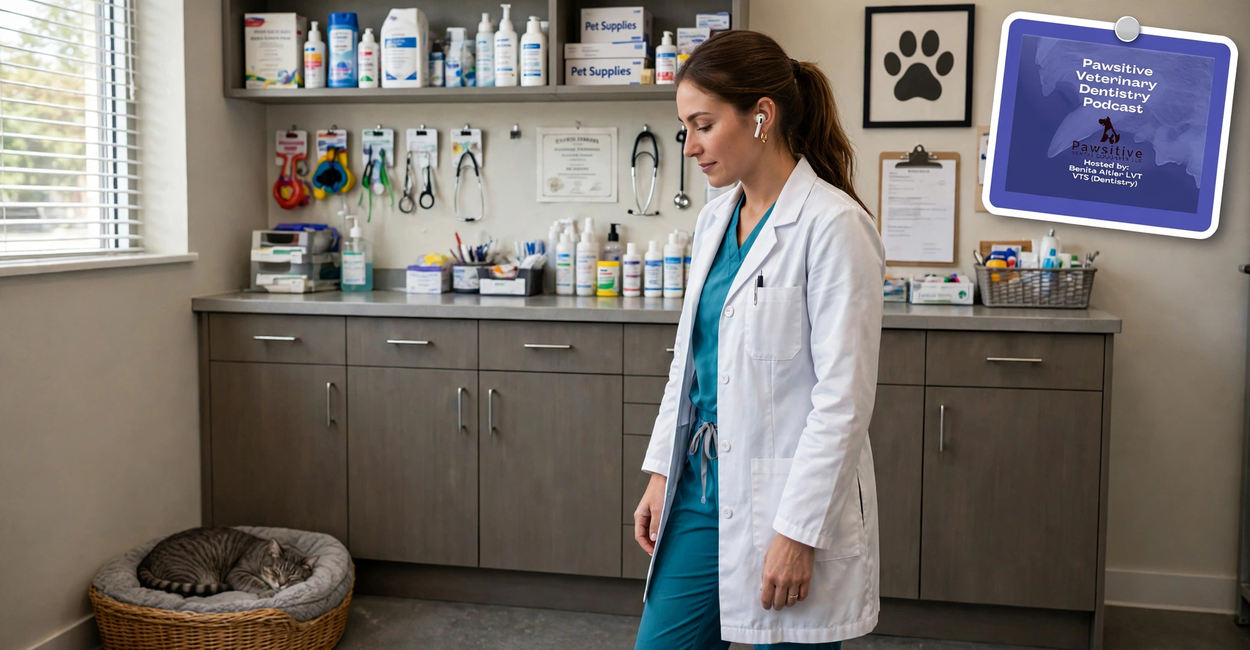
Veterinary dentistry is about so much more than cleaning teeth. From interpreting dental radiographs to managing complex surgical cases and improving anesthesia protocols, dental care requires a combination of clinical knowledge, technical skill, teamwork, and continued education.
That’s where Pawsitive Veterinary Dentistry comes in!
Hosted by Benita Altier, LVT, VTS (Dentistry), the Pawsitive Veterinary Dentistry Podcast brings veterinary dental teams conversations with experienced veterinary dentists, specialists, and veterinary technician specialists.
The episodes use real-world cases and practical discussions to explore topics like:
- Dental pathology
- Radiology
- Anesthesia
- Surgery
- Patient safety
- The evolving role of the veterinary dental team
The goal is straightforward: connect evidence-based information with the decisions veterinary professionals make every day.
With 15 episodes covering everything from periodontal care to cleft palate surgery, there’s plenty to explore.
Looking for a place to start? Here are five episodes worth adding to your listening list.
1. Oral Masses in Dogs: What Every Vet Needs to Know
Veterinary teams encounter oral masses regularly, but deciding what happens next can be complicated. In this episode, Dr. Stephanie Goldschmidt discusses canine oral cancer, including biopsy, imaging, staging, surgery, radiation, chemotherapy, prognosis, palliative care, and when referral may be appropriate.
Why listen: It provides practical information for recognizing oral masses and understanding the diagnostic and treatment decisions that may follow.
2. Full Mouth Extractions for FCGS: Is It the Only Option?
Feline chronic gingivostomatitis can be painful and challenging to manage. Dr. Maria Soltero Rivera joins Altier to discuss what causes FCGS, why full-mouth extractions are often recommended, what happens after surgery, and emerging approaches for cats with persistent disease.
Why listen: The conversation explores a complex feline dental condition while addressing one of the biggest questions surrounding treatment: what options exist when conventional approaches aren't enough?
3. Young Dogs & Tooth Fractures: Modern Treatment Options
A fractured tooth in a young dog presents unique considerations because the tooth may still be developing. Dr. Sandra Manfra Marretta discusses vital pulp therapy, treatment decision-making, common mistakes, and when a tooth may be saved rather than extracted.
Why listen: It offers practical insight into a common injury while exploring treatment options that can help preserve developing teeth.
4. Tooth Fractures in Dogs and Cats and the Veterinary Technician’s Role in Endodontics
Tooth fractures are among the most common dental findings in veterinary patients. This episode focuses on the veterinary technician's role, from recognizing potential pulp exposure and obtaining dental radiographs to supporting endodontic procedures and communicating treatment options with clients.
Why listen: It highlights how technicians can make a meaningful difference in dental assessment, patient care, and client education.
5. “Veterinary Dentistry Is a Team Sport”
Good dentistry doesn't happen in isolation. In this episode, Dr. Kris Bannon discusses the importance of coordinated teamwork throughout the practice, from identifying dental concerns at the front desk to anesthesia monitoring and patient care in the treatment area.
Why listen: The episode takes a broader look at how every member of the veterinary team can contribute to better dental care.
Keep Learning, One Episode at a Time
One advantage of veterinary podcasts is their flexibility. A dental conversation can fit into a commute, a lunch break, or a few quiet minutes between appointments, and one useful takeaway can be enough to spark change in your practice.
Whether you're a veterinarian, veterinary technician, practice leader, or simply looking to strengthen your team's approach to dentistry, the Pawsitive Veterinary Dentistry Podcast lets you learn directly from professionals working in the field.