

5 Conversations Changing How Veterinary Teams Approach Dentistry
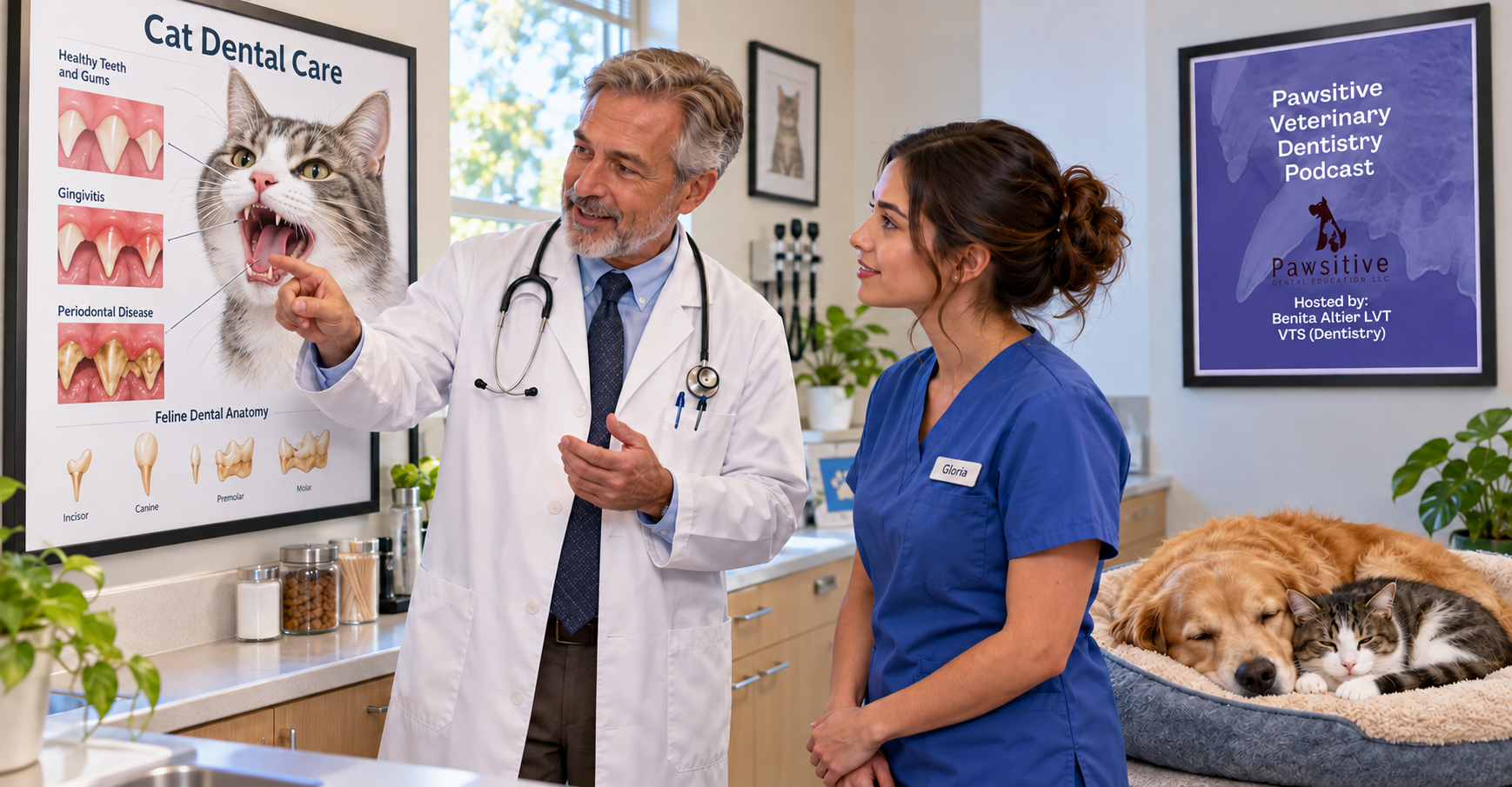
Veterinary dentistry has come a long way from just removing plaque and tartar. Today, comprehensive oral healthcare involves early disease recognition, diagnostic imaging, pain management, specialized treatment, and collaboration across the veterinary team.
But providing better dental care isn't just about having the right equipment or mastering a new technique. It's also about how teams communicate, share responsibilities, and apply current knowledge in everyday practice.
The Pawsitive Veterinary Dentistry Podcast, hosted by Benita Altier, LVT, VTS (Dentistry), explores these ideas through conversations with veterinary dental specialists and experienced technicians.
Here are five discussions that highlight how a more collaborative, informed approach can strengthen veterinary dentistry.
1. Veterinary Dentistry Is a Team Sport
Dental care doesn't begin and end in the treatment room. From recognizing potential oral health concerns during an examination to supporting anesthesia and educating clients, multiple team members contribute to a patient's dental experience.
Podcast discussion: In “Veterinary Dentistry Is a Team Sport,” Dr. Kris Bannon explores the importance of collaboration throughout the practice.
Every team member has a role in supporting oral health. Establishing clear responsibilities, improving communication, and helping staff recognize dental concerns can make dentistry a more consistent part of patient care, not just an appointment that happens once a year.
2. Veterinary Technicians Are Essential to Periodontal Care
Periodontal disease is one of the most common health concerns affecting dogs and cats, yet it can progress beneath the gumline without obvious signs at home. Identifying and addressing it requires more than a quick visual inspection.
Podcast discussion: “On the Front Lines of Periodontal Care: Why Veterinary Technicians Have a Critical Role” talks about the contribution veterinary technicians make to periodontal care and the broader dental team.
Technicians play an important role in the following areas, within their training and applicable scope of practice:
- Patient preparation
- Anesthetic monitoring
- Dental charting
- Radiography
- Assisting with procedures
- Client education
Investing in their dental knowledge and skills can help practices build more consistent workflows and strengthen the quality of care they provide.
3. Regional Nerve Blocks Make Pain Management a Team Priority
Pain management is a fundamental part of responsible dental care. Dental procedures can involve significant discomfort, especially when extractions or other surgical interventions are necessary.
Podcast discussion: In “The Block Stops Here: Regional Dental Anesthesia and Leading Your Team,” Dr. Chris Snyder discusses regional dental nerve blocks, including their role in analgesia and the importance of helping teams implement these techniques consistently.
Appropriate regional nerve blocks can help control pain during and after dental procedures and may reduce the amount of general anesthetic required.
Their use should be guided by patient-specific needs, appropriate training, and clinical judgment. Team education and clear protocols can help make pain management a deliberate part of dental planning rather than an afterthought.
4. Understanding How Veterinary Dentistry Became a Specialty
Modern veterinary dentistry is built on decades of clinical advancement, research, and professional education. Understanding that history helps illustrate why specialized knowledge and continued learning matter.
Podcast discussion: “How Veterinary Dentistry Became a Specialty: A 50-Year Journey” explores the development of veterinary dentistry and the people and advances that helped shape the field.
Dentistry continues to evolve, and yesterday's routine approach may not reflect today's best available options. Making continuing education part of a practice's culture helps veterinary professionals build their knowledge, evaluate new techniques, and recognize when a case requires additional expertise.
5. Stronger Referrals, Better Collaboration
Not every dental case can—or should—be managed entirely within general practice. Some patients require advanced diagnostics, specialized surgical procedures, or treatment planning that benefits from a veterinary dental specialist's expertise.
Podcast discussion: In “The Perfect Partnership: The General Practice-Dental Specialty Referral Relationship,” the conversation focuses on how general practitioners and specialists can work together to support patients.
A successful referral relationship starts with recognizing when additional expertise may benefit a patient. Clear communication, appropriate diagnostic information, and coordinated follow-up help create a smoother experience for both clients and veterinary teams.
Referral isn't a failure to manage a case; it's another way to provide appropriate care.
Building a Better Approach to Veterinary Dentistry
These five conversations share a common message: comprehensive dental care depends on more than the procedure itself. It requires knowledgeable teams, thoughtful pain management, effective communication, and a willingness to keep learning.
Start with small, practical improvements:
- Review dental protocols.
- Strengthen technician training.
- Improve referral communication.
These changes can help make oral health a more consistent priority.
Better veterinary dentistry is about building stronger teams, making informed clinical decisions, and helping patients live healthier, more comfortable lives.