

The Veterinary Staffing Challenge: How Animal Shelters Attract and Retain Veterinarians
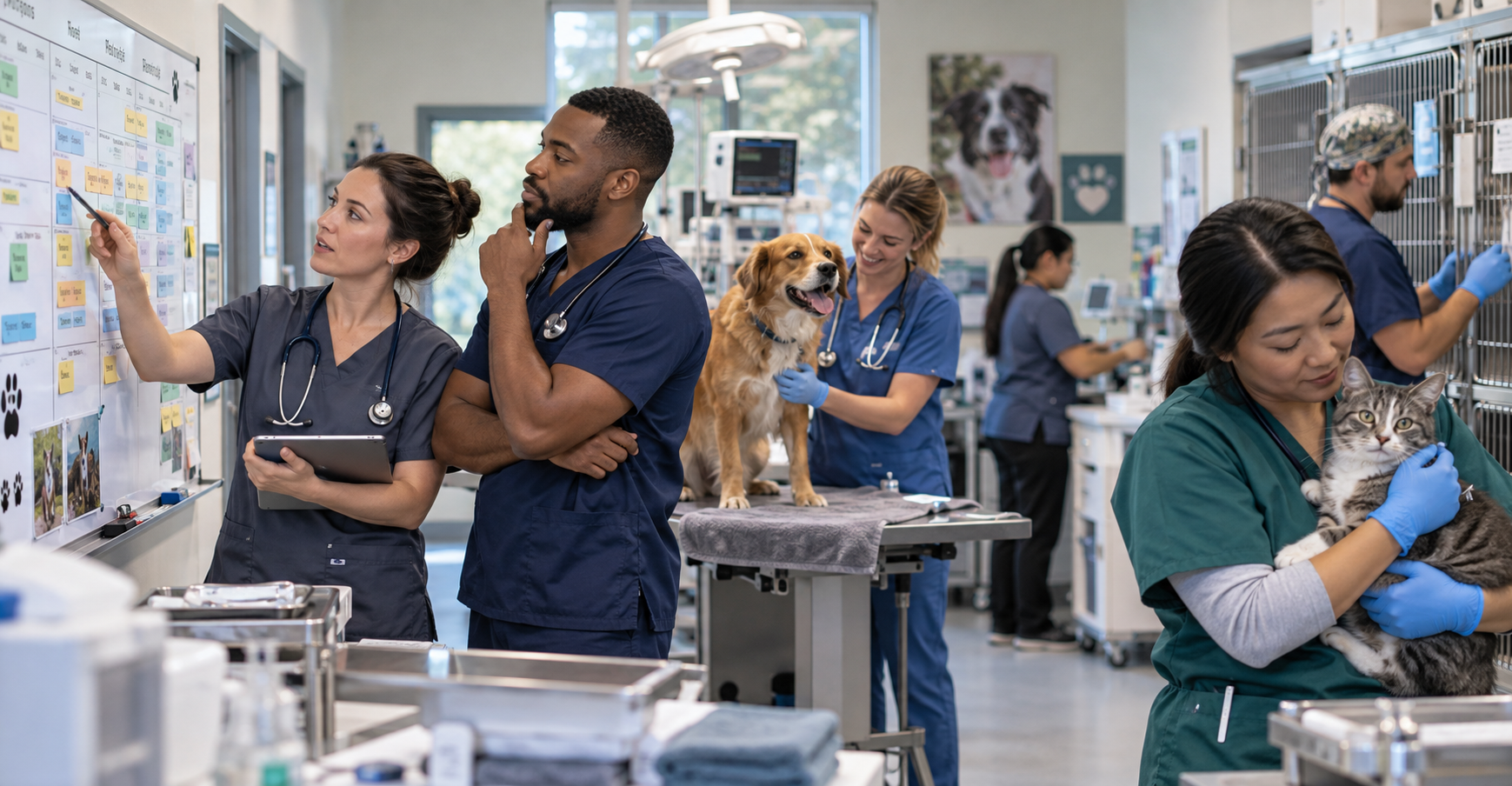
Ask an animal shelter where its veterinary care comes from, and the answer may be more complicated than you expect.
Some shelters employ a full-time veterinarian. Others rely on part-time doctors, relief veterinarians, contract surgeons, or partnerships with nearby veterinary practices.
Some work closely with veterinary schools and residency programs, while others piece together several sources of veterinary support to meet the needs of the animals in their care.
Behind all these approaches is the same challenge: finding enough veterinarians to provide high-quality care in an already competitive labor market.
For animal shelters, the veterinary staffing question isn't simply, “How do we find a veterinarian?” It's also, “How do we build a workplace where a veterinarian wants to stay?”
A Different Kind of Veterinary Practice
Shelter medicine can look very different from traditional companion-animal practice.
A shelter veterinarian may perform surgery in the morning, manage an infectious disease outbreak in the afternoon, evaluate animals entering the shelter, develop population-health protocols, consult on behavior and welfare, and help determine how to use medical resources most effectively across an entire population.
That combination can be challenging, but it can also be one of the most rewarding aspects of the profession.
Shelter veterinarians aren't only treating individual patients. They are often working at the intersection of medicine, population health, animal welfare, public health, and community access to veterinary care.
For veterinarians who are passionate about animal welfare, shelter medicine can offer a career path that combines clinical medicine with a broader community mission.
Making Shelter Jobs More Competitive
Mission matters, but it can't carry the entire employment package.
Veterinarians still have bills to pay, careers to build, and lives outside of work. To compete for veterinary talent, a shelter must consider the complete employment experience.
That may include:
- Competitive compensation
- Health, retirement, and other benefits
- Paid continuing education and professional development opportunities
- Flexible scheduling and generous paid time off
- Leadership opportunities and mentorship for newer veterinarians
- Modern medical equipment and facilities
Schedule flexibility can be particularly powerful.
A veterinarian who wants to continue working in private practice may be more willing to work part-time at a shelter. A parent may value predictable hours. A veterinarian nearing retirement may want fewer clinical hours without leaving the profession entirely.
In other words, shelters don't necessarily have to compete by offering one perfect job. They can create multiple ways for veterinarians to participate.
Don't Underestimate the Veterinary Technician
Recruiting veterinarians is only part of the equation.
A strong veterinary technician and support team can make a major difference in whether a veterinarian feels capable of practicing good medicine without constantly fighting operational limitations.
Veterinary technicians can support:
- Anesthesia
- Surgery and patient monitoring
- Laboratory work
- Treatment
- Pharmacy
- Medical records
- Client and adopter education
When doctors have skilled people around them, appropriate equipment, efficient workflows, and clear protocols, they can spend more time practicing medicine and less time compensating for system gaps.
The Mission Is a Major Part of the Offer
Shelters offer something many other veterinary workplaces cannot: the opportunity to influence the lives of large numbers of animals and the people who care for them.
A shelter veterinarian can help an individual dog recover from illness, but that same veterinarian may also develop a vaccination protocol that protects hundreds of animals.
They can perform surgery on an individual cat while also helping a community reduce the number of unwanted litters entering the shelter system.
That population-level impact can be incredibly motivating.
For veterinarians who want their careers to connect more directly with animal welfare and community health, shelter medicine can provide a sense of purpose that extends beyond the exam room.
Building a Sustainable Veterinary Workforce
Ultimately, shelters can't solve the veterinary staffing challenge by relying on a single recruitment strategy.
They need a workforce ecosystem.
That might mean:
- Partnering with veterinary schools to introduce students to shelter medicine
- Offering flexible schedules for veterinarians who want to divide their time between shelter and private practice
- Creating stronger career-development opportunities for veterinarians already on staff
- Investing in veterinary technicians and other support staff
- Providing modern equipment and efficient clinical workspaces
The question isn't simply where shelters can find veterinarians. It's how they can create veterinary careers that people want to build.
For animal shelters, that may be the most important shift of all: moving from recruiting enough veterinary help to building a sustainable veterinary team.
When shelters have the people, training, equipment, and support needed to provide excellent veterinary care, the benefits extend far beyond the medical treatment room—to the animals, the staff, and the communities those shelters serve.