

Preventing Hypothermia in Veterinary Patients: A Smarter Approach to Surgical Warming
Every veterinary team has experienced this:
You glance at the patient monitor halfway through a procedure and notice the body temperature slowly drifting downward. You add another towel, turn up the warm water blanket, maybe grab a heated air blanket—and still, keeping the patient warm can feel like an uphill battle.
Hypothermia during anesthesia is one of the most common challenges in veterinary surgery and dentistry. But with the right veterinary patient warming system, maintaining an ideal body temperature becomes far more manageable.
That’s exactly where the HoverHeat warming blanket is making a difference for veterinary hospitals.
Why Patient Warming Should Be a Priority in Veterinary Medicine
When your patient is under anesthesia, their body loses the ability to regulate temperature effectively. Combined with hair clipping, surgical prep, and exposure to a cool operating room, body heat begins to drop quickly.
That temperature drop matters more than many people realize. Anesthetic hypothermia can lead to:
Slower anesthetic recovery
Increased anesthetic complications
Delayed drug metabolism
Longer patient recovery times
In smaller patients, such as cats, puppies, or toy breeds, the temperature drop can occur even more quickly. That’s why many veterinary hospitals are investing in active warming systems designed specifically for veterinary surgical patients.
How the HoverHeat Warming Blanket Works
The HoverHeat veterinary warming blanket takes a different approach to temperature management than many traditional warming methods.
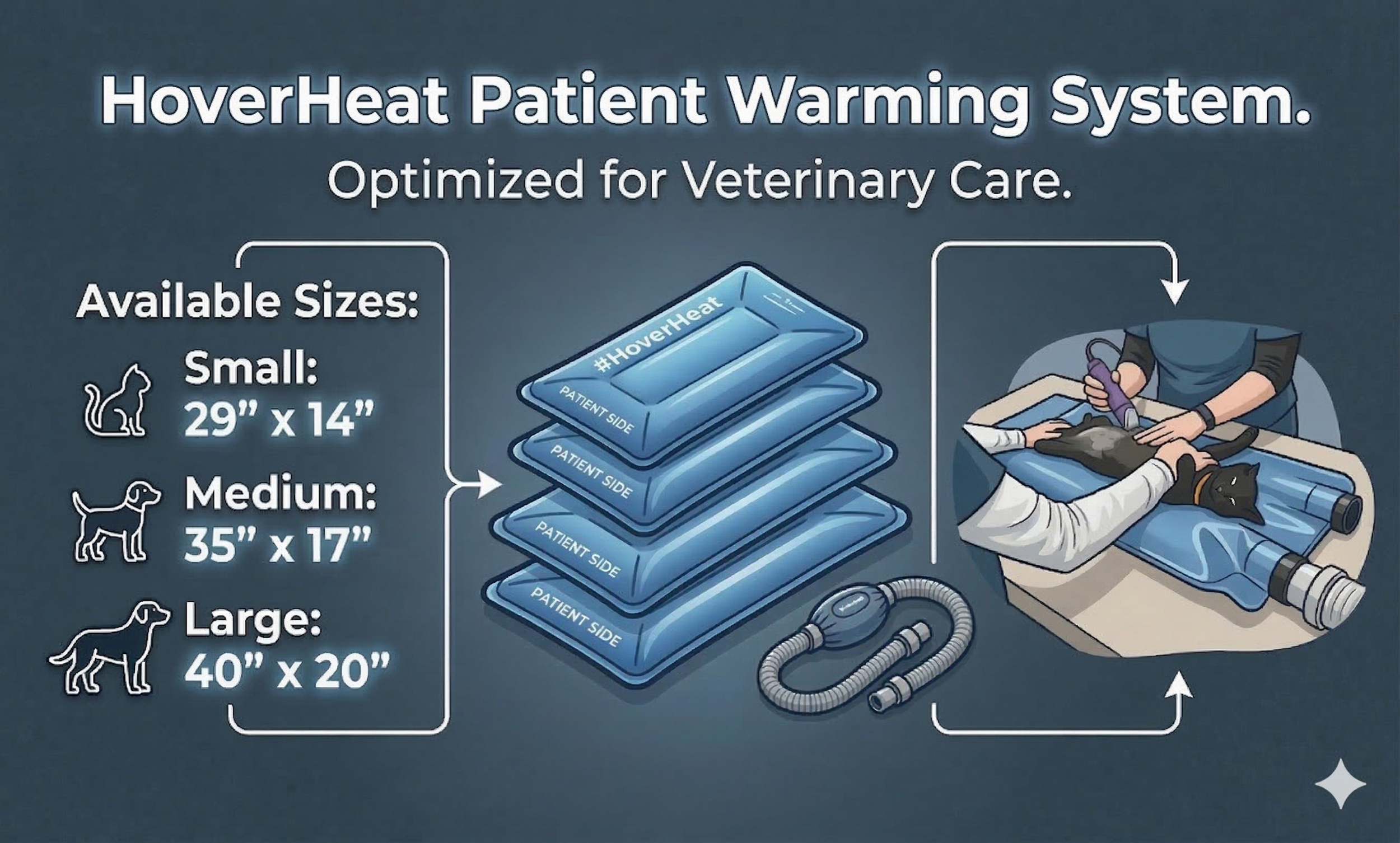
Instead of simply placing heat on the patient, the system uses a cushion of circulating warm air beneath the patient. This allows warm air to move evenly under the body, warming one of the largest heat-loss areas during surgery.
The result is more consistent heat distribution and improved patient warming throughout the procedure. For veterinary hospitals performing procedures like:
Routine spays and neuters
Dental procedures
Orthopedic surgeries
Soft tissue surgeries
…this type of active warming can make a noticeable difference in maintaining stable body temperatures.
Multiple Ways to Warm Patients
One advantage of the HoverHeat warming system for veterinary practices is its versatility.
The system can be used for:
Surgical Procedures: helping to maintain patient temperature throughout anesthesia, especially during longer procedures.
Veterinary Dental Procedures: dentals often involve extended anesthesia times and significant heat loss due to water exposure and patient positioning. Active warming helps keep temperatures stable during these cases.
Recovery: Patients recovering from anesthesia are often still prone to hypothermia. Maintaining warmth during recovery helps support smoother, more comfortable wake-ups.
Designed for Busy Veterinary Hospitals
Veterinary teams need equipment that works with their existing workflow, not something that adds extra complexity to surgery days. The HoverHeat is designed with practicality in mind.
Key features include:
Multiple pad sizes to accommodate different patient sizes
Compatibility with common warm air blowers already used in veterinary practices
Reusable design that reduces disposable blanket costs
Easy cleaning with standard hospital disinfectants
The ability to connect two units for additional warming coverage
For practices focused on improving veterinary surgical efficiency and patient safety, these small workflow improvements can make a big difference over time.
Supporting Better Surgical Outcomes
Veterinary medicine has advanced significantly in patient care standards, particularly in anesthesia monitoring and safety. Today, most hospitals routinely monitor:
ECG
Blood pressure
Oxygen saturation
End-tidal CO₂
Temperature
But monitoring temperature is only half the battle. Preventing hypothermia requires reliable warming tools that work throughout the entire procedure.
Using an active veterinary surgical warming system helps maintain stable patient temperatures from induction through recovery.
And when patients stay warm, everything tends to go more smoothly, from anesthesia recovery to overall patient comfort.
A Simple Upgrade That Makes a Big Difference
You’re always looking for ways to improve patient care while keeping procedures efficient and safe. Sometimes the biggest improvements come from solving everyday problems, like keeping anesthetized patients warm.
The HoverHeat warming blanket is a simple, reliable way to address one of the most common anesthesia challenges in veterinary medicine.
Because when patients stay warm, they recover better, and that’s something every veterinary team hopes for.