
Stop the Blur: Using Gemini AI to Master Large-Dog Radiographs
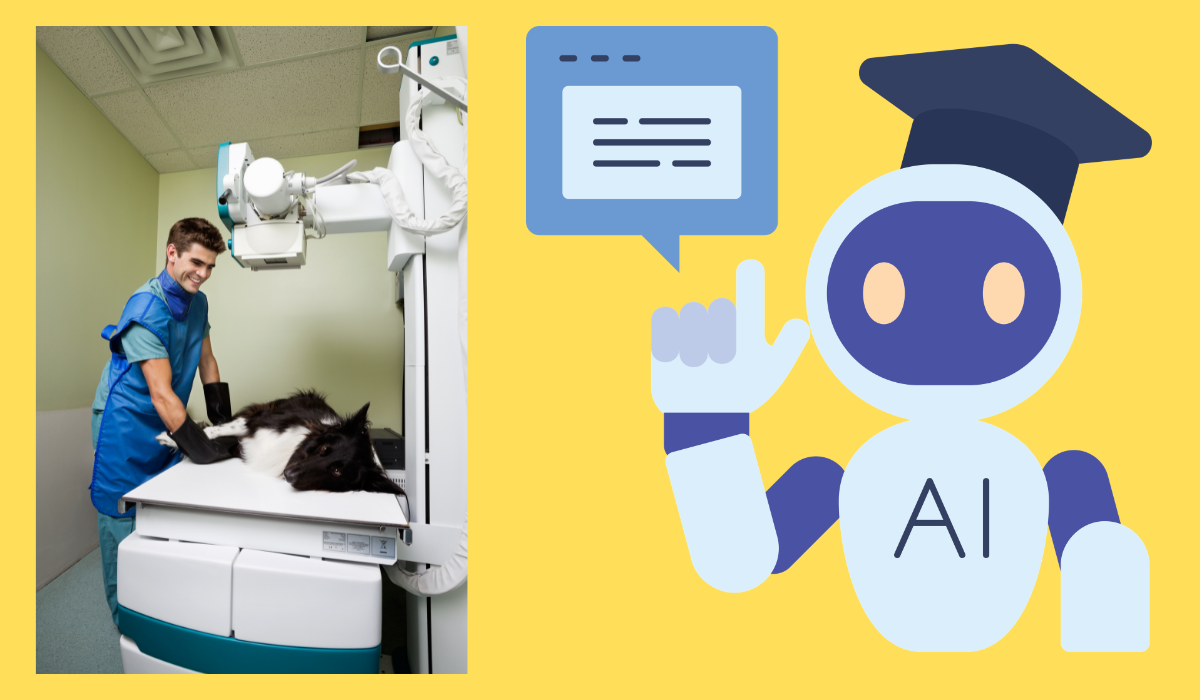
You position beautifully. You center carefully. You collimate appropriately. You hit expose…
And the image comes up blurry. Not just “a little soft,” but diagnostically questionable.
Full-body radiographs on 100lb Labs or obese cats can humble even the most experienced teams. When you’re up against thickness, motion, scatter, and time pressure, things get tricky fast. This is where Gemini, Google’s AI collaborator, becomes an essential tool for your radiology suite.
Sometimes you don’t need more CE; you need a fast, clear answer while the patient is still on the table.
Step 1: Moving Beyond Generic Search
If your team types: “Why are my x-rays blurry?” they’ll get a generic article. To get "Level 2" results, teach your staff to use Power Prompts that include specific constraints and a requested format.
The Power Prompt: "Act as a senior veterinary radiographer. Give me a 4-point checklist to fix motion blur for a 95lb dog on a DR system. Focus only on kVp/mA adjustments and physical restraint. Keep it under 50 words."
Step 2: Troubleshooting with "Physics-to-Practice"
Most of us don't need a physics lecture mid-shift. We need reminders that translate to immediate action. Instead of asking "why" something works, ask Gemini how to apply it to your specific machine.
The Power Prompt: "I’m shooting a 100lb dog, and the image is blurry from respiratory motion. My current settings are [Insert Your Settings]. What specific mA increase and exposure time decrease do you recommend to stop motion while maintaining density?"
Step 3: Create Instant Clinical "Cheat Sheets"
If your team struggles with consistency, use Gemini to build a reference tool that can be printed and taped to the wall near the generator.
The Power Prompt: "Create a simplified technique chart table for 'Large/Obese Patients' on a DR system. Include columns for: Body Thickness (cm), Grid Use (Yes/No), and kVp adjustment factors. Format it as a clean, scannable table."
Step 4: Mastering Motion Control
Blurry images aren’t always about the settings; they’re about the patient. Gemini can help your team refine their physical approach in seconds.
The Power Prompt: "List the 3 best sedation protocols and 2 positioning aids specifically for reducing respiratory motion in obese cats during thoracic films. Bullet points only."
Why This Matters for Your Workflow
A blurry radiograph is more than just a bad image; it’s a drain on your practice's health. Retakes lead to:
Increased Radiation: Unnecessary exposure for staff and patients.
Bottlenecks: A 10-minute study turning into a 30-minute ordeal.
Staff Burnout: Frustration from "guessing" at settings.
3 Tips for "Talking" to Gemini in the Clinic
Assign a Persona: Start your prompt with "Act as a senior veterinary radiographer" to ensure a professional tone and clinically grounded advice.
Use Specific Constraints: Tell the AI to "Keep it under 50 words" or "Use bullet points." This prevents you from having to read a long article while a patient is on the table.
Give It Your "Inputs": If you want a better setting, tell Gemini what you are currently using. AI is best at suggesting the "next step" when it knows where you are starting.
The "Why" Behind the Prompt
Using Gemini proactively reduces retakes, minimizes staff frustration, and ensures diagnostic-quality images the first time—improving both patient care and clinic efficiency.
The Bottom Line: AI as a Clinical Confidence Tool
We tend to talk about AI as if it’s only for "robotic" diagnostics. But in a busy clinic, Gemini’s best use is helping a technician stand in front of a DR monitor, think clearly, and get the shot right the second time—or better yet, the first.
Why AI Works:
AI answers improve dramatically when it knows:
What equipment
What happened
What you observed
What help do you want?
Think of it like calling tech support — details matter.