
The Hidden Opportunity: Turning a Closed Veterinary Hospital Into Your Dream Practice
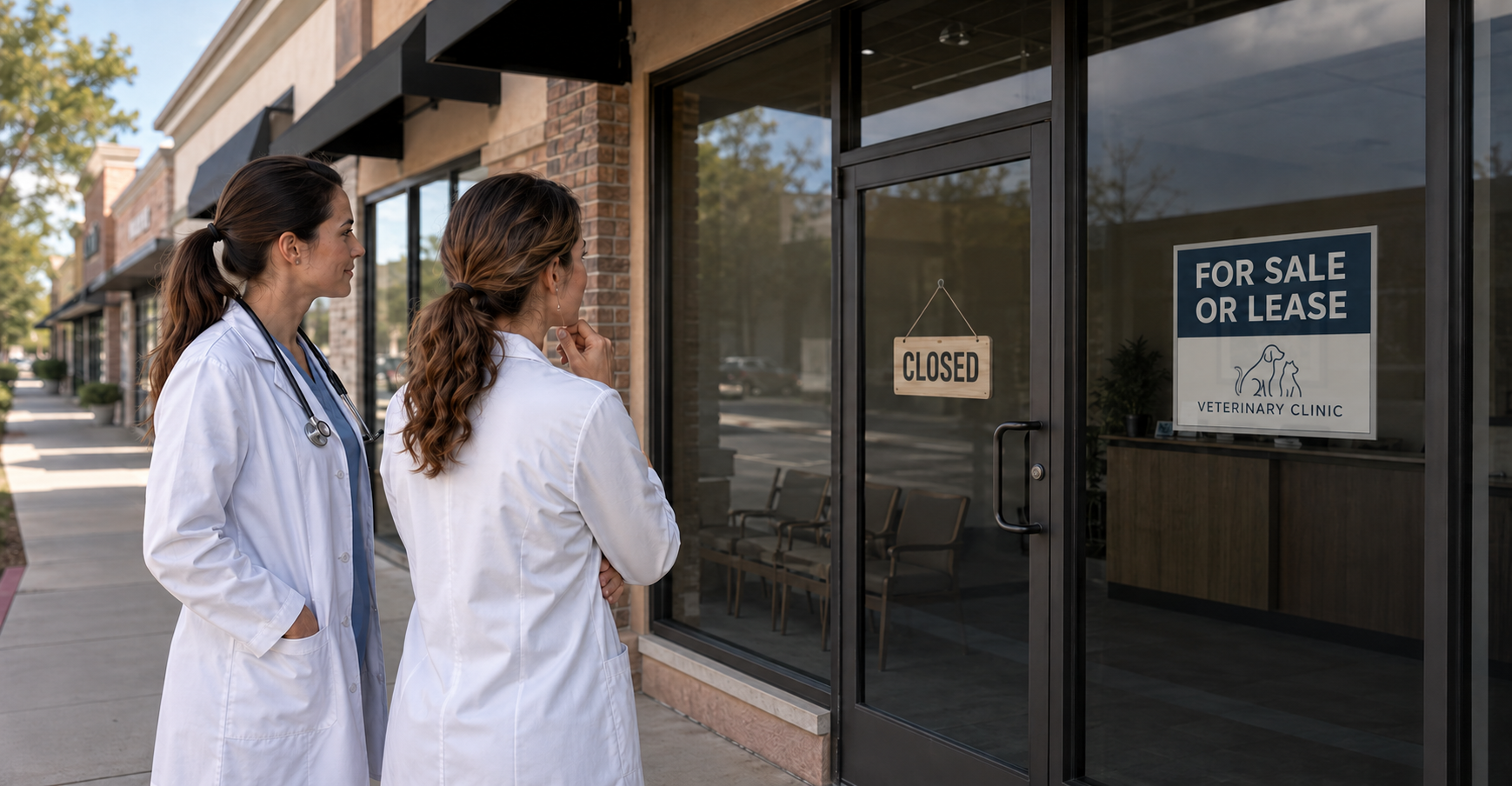
Before You Build: Consider Buying or Leasing a Closed Veterinary Clinic
For many veterinarians, owning a practice feels like the ultimate career goal. But then reality sets in.
Commercial construction costs continue to climb. Build-outs can take months. Equipment purchases add up quickly. Before long, the dream of opening your own hospital can start to feel financially out of reach.
But what if the perfect practice is already sitting there, waiting for someone to unlock its potential?
Across the country, veterinary hospitals occasionally close for reasons such as:
- Corporate restructuring
- Lease changes
- Owner retirement
- Relocation
- Shifts in local demand
While seeing a neighborhood clinic close its doors can be disappointing for pet owners, it can also create a valuable opportunity for independent veterinarians who are ready to build something of their own.
Instead of starting with four empty walls, you may be able to breathe new life into a space that was already designed to care for animals.
Why a Former Veterinary Hospital Can Be a Gold Mine
Building a veterinary hospital from scratch is expensive—not just because of the equipment, but because of everything hidden behind the walls.
Think about what may already exist in a former veterinary clinic:
- Exam rooms
- Treatment areas and surgical suites
- Kennel runs
- Pharmacy shelving
- Specialized plumbing
- Medical-grade electrical systems
- Reception and waiting areas
These are not just conveniences. They represent significant investments that have already been made.
Repurposing an existing veterinary facility can dramatically reduce renovation time and construction costs. This may allow you to focus more of your budget where it matters most: your patients, your team, and the technology that will help your practice grow.
Not Everything Needs to Be Brand New
One of the biggest misconceptions about opening a veterinary practice is that everything has to be purchased new.
The reality?
Many existing fixtures inside a former veterinary hospital may still have years of useful life remaining.
Depending on your lease agreement or purchase terms, you might inherit items such as:
- Kennels
- Cabinetry
- Exam room counters
- Surgical tables
- Reception desks
- Storage shelving
- Built-in workstations
- Isolation rooms
Every piece you can safely reuse is money that can be invested elsewhere. That does not necessarily mean you should keep everything, though.
Know Where to Invest
While cabinets and kennels can often serve a new practice well, diagnostic technology is an entirely different story.
Older imaging equipment may no longer provide the speed, image quality, or reliability that today’s veterinary teams expect. Outdated systems can also become more expensive to maintain over time.
When opening a practice, it may be wise to upgrade key technologies such as:
- Digital radiography
- Dental imaging systems
- Ultrasound
- Anesthesia equipment
- Patient monitoring equipment
- Infusion pumps
These investments can improve efficiency, enhance patient care, and help create a modern client experience from day one.
Think of it this way: Keep what still works well, and upgrade the tools that directly affect diagnostics, workflow, reliability, and patient outcomes.
A Faster Path to Opening Your Doors
Starting with an existing veterinary hospital can also save something every entrepreneur values: time.
Instead of waiting months for construction permits, plumbing, electrical work, and room layouts, much of the infrastructure may already be in place.
That means you can spend more time preparing your team, building client relationships, and planning your grand opening—and less time staring at construction schedules.
For veterinarians transitioning from relief work, associate positions, or a mobile practice, this approach can significantly shorten the path from an idea to opening day.
Every Closed Clinic Represents a New Beginning
A building that once cared for pets does not have to become another empty storefront. With the right vision, it can become a thriving independent veterinary hospital again.
Families often appreciate seeing a familiar veterinary location come back to life. Former clients may be excited to have veterinary care available in their neighborhood again. Your team also gets the opportunity to build something meaningful without having to start completely from scratch.
Sometimes the best opportunity is not finding an empty building. It is finding one that already knows how to be a veterinary hospital.