

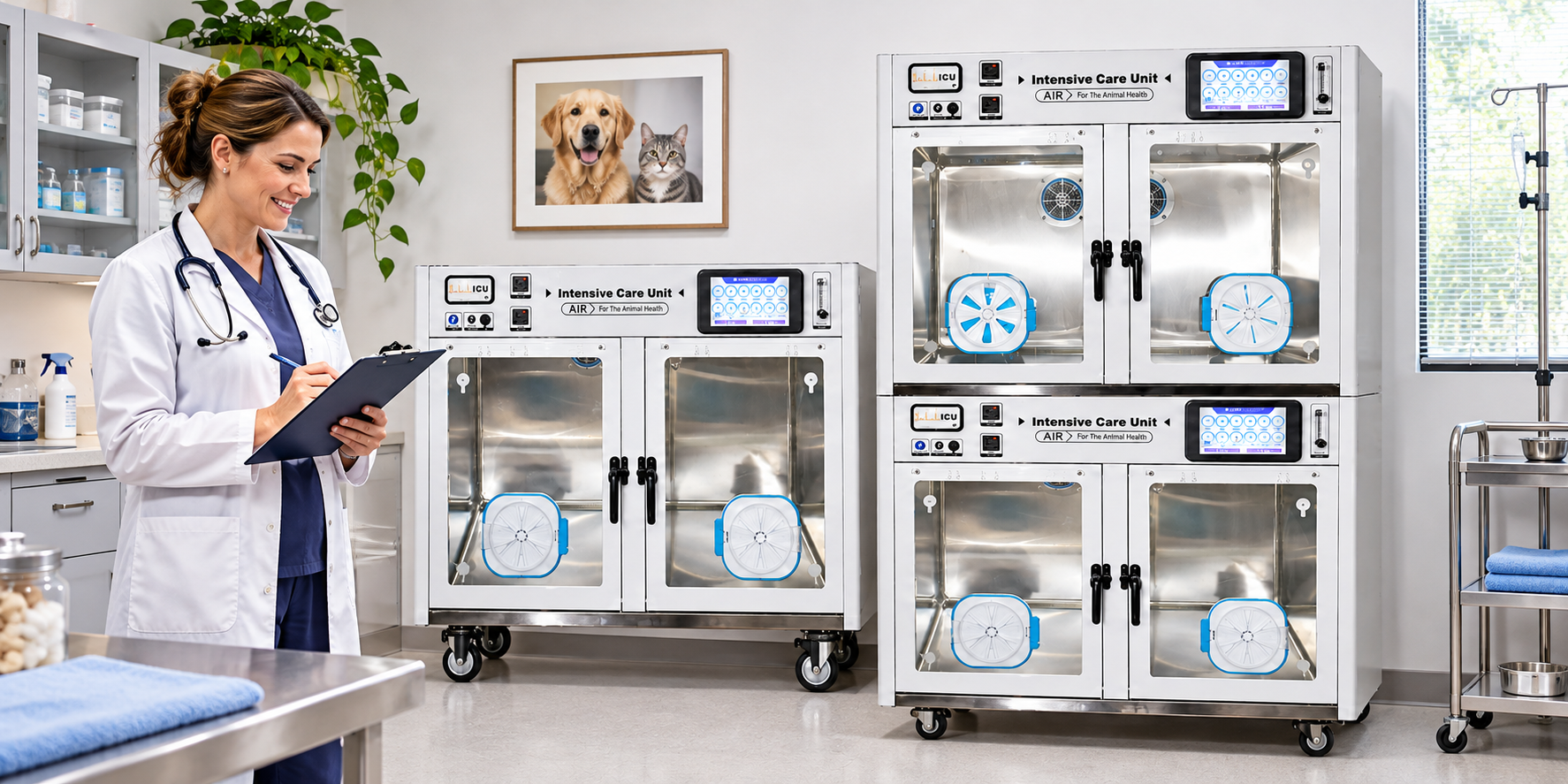
Why a Soda Lime-Free Veterinary ICU Is Safer for Pets and Staff
In veterinary intensive care, every detail matters. From the medical equipment your team uses to the air your patients breathe, creating a safe and comfortable recovery environment is essential.
Veterinarians regularly care for fragile newborns, senior pets, postoperative patients, and animals struggling with respiratory problems. These patients need careful monitoring and an environment designed to support their recovery.
One important improvement in veterinary ICU design is the elimination of soda lime, a chemical commonly used to absorb carbon dioxide (CO₂) in certain breathing systems.
A soda lime-free veterinary intensive care unit removes the need to handle this chemical absorbent while providing a controlled environment for pets requiring additional medical attention.
What Is Soda Lime, and Why Can It Be a Problem?
Soda lime is a chemical absorbent used in many veterinary anesthesia breathing circuits to remove carbon dioxide from exhaled gases. It helps prevent carbon dioxide from accumulating when breathing gases are recirculated.
Although soda lime performs an important function in properly maintained anesthesia equipment, it requires careful handling, replacement, and disposal.
Depending on its formulation and condition, soda lime can present several concerns:
- Dust exposure: Handling or replacing soda lime can release alkaline dust that may irritate the eyes, skin, or respiratory tract.
- Chemical irritation: Direct contact with the absorbent can be harmful, particularly when proper handling procedures are not followed.
- Maintenance requirements: Used or exhausted absorbent must be monitored and replaced according to equipment guidelines.
- Potential chemical reactions: Under certain conditions, such as when some absorbents become excessively dry and interact with inhaled anesthetics, harmful byproducts can form in anesthesia circuits.
These risks can be managed with appropriate procedures. However, equipment that does not require soda lime eliminates the need to handle this particular chemical during routine operation.
A Breath of Fresh Air: The Soda Lime-Free Advantage
Our soda lime-free veterinary ICU is designed to provide an environment where veterinary teams can monitor and adjust important conditions without relying on soda lime as a consumable.
By eliminating this absorbent, the ICU removes a potential source of chemical dust and reduces the maintenance associated with handling and replacing soda lime.
This is particularly valuable when caring for animals with sensitive respiratory systems. It also benefits veterinary professionals who work around ICU equipment throughout the day.
The ICU provides controlled oxygen, temperature, humidity, and carbon dioxide management, helping your team maintain appropriate conditions for patients receiving intensive care.
An important distinction: Soda lime-free operation removes the hazards associated with that absorbent. It does not eliminate every air-quality concern or replace proper ventilation, cleaning, infection control, and patient monitoring.
Better Veterinary Care Starts with a Safer Environment
Different patients have different medical needs. A controlled ICU environment can help your team provide individualized support for a variety of challenging cases.
1. Newborn and Neonatal Care
Newborn puppies, kittens, and other fragile patients can be especially sensitive to changes in their surroundings. A controlled ICU environment helps veterinary teams manage temperature, humidity, and oxygen support according to each patient's needs.
2. Infectious Disease Care
Patients with infectious diseases require careful monitoring and appropriate infection control procedures.
An ICU designed for controlled patient care can support treatment, but it does not replace isolation protocols, disinfection, or other measures needed to prevent cross-contamination.
3. Postoperative Recovery
Recovery after surgery is an important time for patient observation. Some pets require additional oxygen support, temperature management, or closer monitoring while recovering from anesthesia and surgical procedures.
An ICU provides a dedicated environment where your staff can continue appropriate postoperative care.
4. Critical Care Patients
Critically ill animals may need close observation and carefully managed environmental conditions.
The veterinary ICU helps your team monitor important chamber conditions while providing a dedicated space for patients requiring additional care.
5. Cardiopulmonary Disease
Animals experiencing heart or lung problems may benefit from carefully prescribed oxygen therapy and a controlled recovery environment.
Reducing unnecessary sources of respiratory irritation is especially important when working with patients that already have compromised breathing.
6. Elderly Patient Care
Senior pets often face multiple medical challenges. Some have reduced respiratory reserve, heart disease, or difficulty maintaining comfortable body temperatures.
A veterinary ICU can help your team provide additional support while monitoring these vulnerable patients.
Additional Benefits of Our Veterinary ICU
Soda lime-free operation is one important feature, but it is not the only consideration when choosing intensive care equipment.
Our veterinary ICU also includes:
- Adjustable oxygen management: Helps your team maintain appropriate oxygen conditions for patient care.
- Temperature and humidity control: Supports individualized environmental settings based on patient needs.
- Carbon dioxide regulation: Includes an independent CO₂ filtration system and monitoring.
- Real-time monitoring: A touchscreen provides information about important ICU functions.
- Built-in safety features: Includes oxygen warnings, emergency ventilation prompts, and battery backup protection.
- Flexible patient capacity: A removable divider allows the chamber to accommodate one or two patients as appropriate.
You can review the available features, dimensions, and configuration options on our veterinary ICU product page .
Oxygen Support Is Another Important Consideration
Depending on the patient's condition, supplemental oxygen may be an important part of the treatment plan.
Our ICU can be paired with an optional oxygen concentrator to support oxygen delivery.
Learn more about our 10L veterinary oxygen concentrator and how it can support ICU chambers and other veterinary applications.
Peace of Mind for Veterinary Staff and Pet Owners
Veterinary professionals work hard to give their patients the best possible care. Their equipment should support that goal without introducing unnecessary complications.
A soda lime-free ICU simplifies one part of the care environment by eliminating the need to handle and replace a chemical carbon dioxide absorbent.
This allows veterinary teams to focus more attention on patient monitoring, treatment, and recovery.
Pet owners also appreciate knowing their companions are receiving care in equipment designed with patient comfort, environmental control, and safety in mind.
Frequently Asked Questions About Soda Lime-Free Veterinary ICUs
1. What does soda lime-free mean in a veterinary ICU?
It means the ICU does not require soda lime as a chemical absorbent during normal operation. This eliminates the need to handle and replace that consumable within the ICU.
2. Is soda lime dangerous to veterinarians or pets?
Soda lime is widely used in anesthesia equipment and can be managed safely when handled and maintained correctly. However, its alkaline dust and direct chemical contact can cause irritation. Some formulations can also react with anesthetic gases under specific conditions.
3. Does a soda lime-free ICU still control carbon dioxide?
Yes. Our veterinary ICU includes an independent carbon dioxide filtration system and CO₂ management features without requiring traditional soda lime.
4. Which veterinary patients may benefit from an ICU?
Veterinary ICUs can support newborns, postoperative patients, critically ill animals, pets with cardiopulmonary conditions, and elderly patients. They can also be used in infectious disease care when appropriate infection control procedures are followed.
5. Does a soda lime-free ICU eliminate the need for regular cleaning?
No. Proper cleaning, disinfection, ventilation, equipment maintenance, and patient monitoring remain essential. Soda lime-free operation specifically eliminates the need to manage that chemical absorbent.
6. Can I get help choosing the right veterinary ICU?
Absolutely. Brad Haven, Jr. can answer questions about the ICU, available configurations, oxygen support, and how the equipment may fit your veterinary practice.
A Safer Approach to Veterinary Intensive Care
Choosing veterinary equipment is about more than adding technology to your practice. It is about giving your team the tools they need to provide thoughtful, dependable patient care.
A soda lime-free veterinary ICU helps reduce a specific source of chemical exposure while supporting a controlled recovery environment for animals that need extra attention.
If you are considering an ICU for your practice, I would be glad to answer your questions and help you evaluate the available options.
Call Brad at 877-545-1202
Stop Paying Too Much for Veterinary Equipment.