
From Referral to Diagnosis: The MRI Patient Journey in a Busy Practice
When practices first start considering MRI, it’s easy to focus on the machine itself.
The specs. The installation. The financial investment.
But eventually another question surfaces: “What would this actually look like in our hospital day-to-day?”
And honestly, it’s such a good question to ask.
Because successful MRI integration isn’t just about having advanced imaging, it’s about creating a workflow that feels manageable, efficient, and sustainable for your team.
The good news is that most practices don’t build perfect MRI workflows overnight. They build them one protocol, one patient, and one team adjustment at a time.
Let’s walk through what the MRI patient journey can realistically look like inside a busy veterinary practice.
It Starts Before the Appointment Is Even Scheduled
One of the biggest shifts in practice experience after adding MRI is becoming more intentional about case selection. Not every patient needs advanced imaging. But the right cases become much clearer over time.
Common MRI candidates often include:
Suspected IVDD cases
Seizure patients
Chronic neurologic symptoms
Unexplained pain or lameness
Patients are not responding to treatment as expected
As your team gains confidence, scheduling becomes more streamlined because everyone begins to recognize which cases are most likely to benefit from MRI. That’s where strong communication between doctors, technicians, and client care teams becomes incredibly important.
When everyone understands which patients are appropriate candidates, which diagnostics should be performed beforehand, and how to prepare clients for the process, the entire workflow runs more smoothly before the patient even walks through the door.
The Day-of Workflow: Organized, Not Chaotic
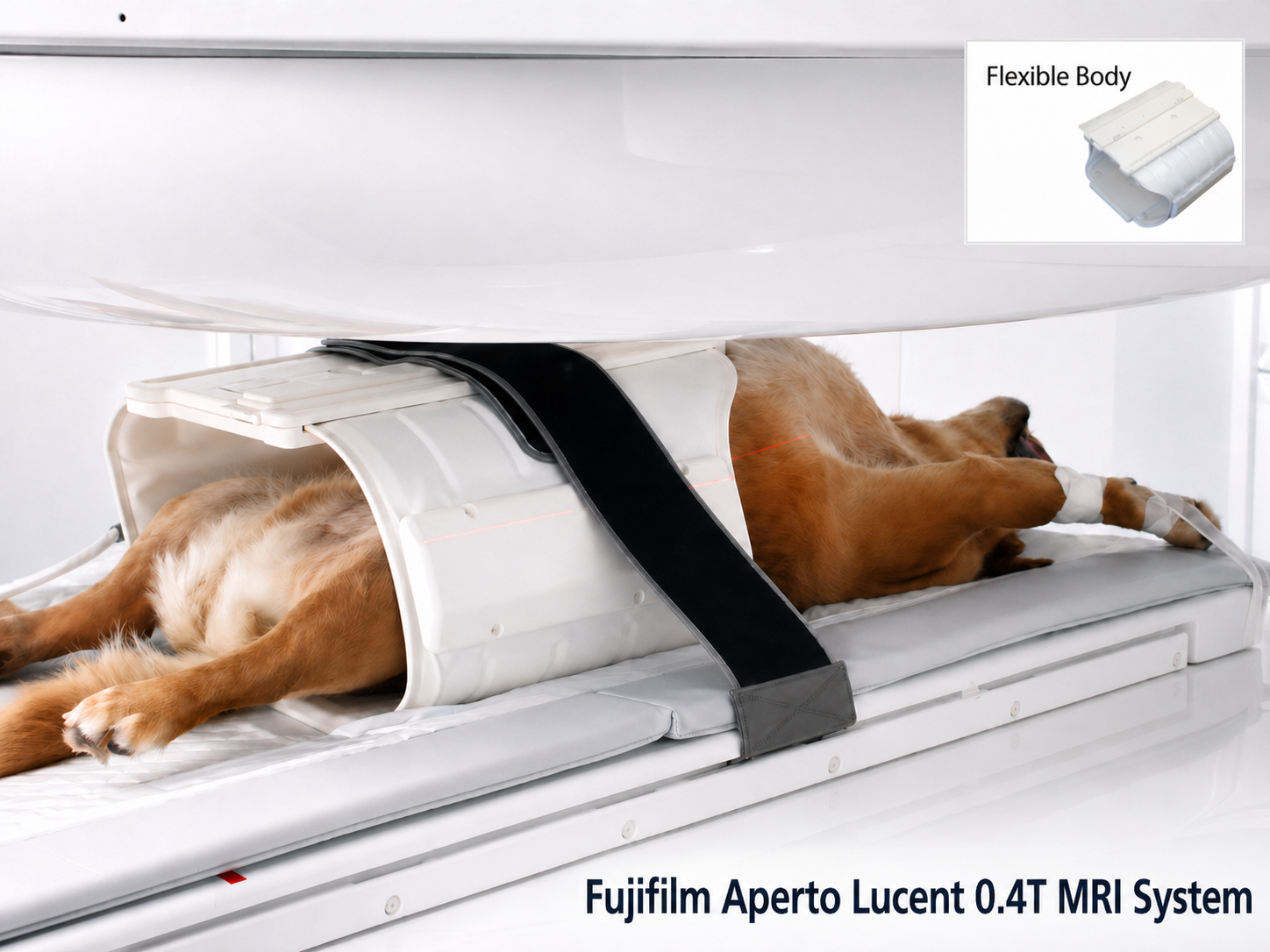
From the outside, an MRI can seem an intimidating operation. In reality, many practices discover that once protocols are established, MRI days become surprisingly structured. Especially using an MRI like theFujifilm Aperto Lucent 0.4T MRI system.
Typically, the workflow looks something like this:
Morning admission and patient assessment
Sedation or anesthesia preparation
MRI safety checks
Positioning and imaging
Recovery and monitoring
Image review and reporting
The key is consistency. The more repeatable your protocols become, the less stressful the process feels for everyone involved. And unlike many areas of veterinary medicine, which can feel unpredictable by nature, MRI often rewards preparation and routine.
Team Roles Matter
MRI is one of the clearest examples of how veterinary medicine truly functions as a team effort. A smooth imaging day depends on multiple moving pieces working together:
Veterinarians selecting appropriate cases
Technicians managing anesthesia and positioning
Assistants supporting patient handling and workflow
Client care teams coordinating communication and scheduling
Every role impacts efficiency. And interestingly, many hospitals find MRI creates opportunities for team growth:
Technicians developing advanced anesthesia skills
Staff are becoming more confident with neurology cases
Improved collaboration between departments
For some teams, adding MRI becomes more than a service expansion—it becomes a professional development opportunity across the hospital.
Positioning and Preparation Can Make or Break the Scan
One thing that practitioners learn quickly is that MRI quality doesn’t depend solely on the machine itself. Patient preparation matters. Good positioning:
Improves image consistency
Reduces repeat sequences
Shortens anesthesia time
Helps radiologists interpret studies more accurately
And in busy hospitals, efficiency matters. Even small improvements in preparation and workflow can significantly reduce recovery times, improve scheduling, and lower stress levels.
That’s why many successful MRI programs focus heavily on protocol refinement early on.
Report Turnaround: Where Answers Start Taking Shape
For both clients and clinicians, the moment that matters most… when the scan is complete. Now everyone wants answers. Depending on the hospital setup, MRI studies may be:
Reviewed internally by specialists
Sent to teleradiology services
Interpreted collaboratively between teams
Fast, clear reporting can dramatically improve workflow momentum:
Treatment plans move forward faster
Surgical decisions happen sooner
Client communication becomes more confident and direct
And perhaps most importantly, patients spend less time in diagnostic limbo. That’s something both veterinary teams and pet owners deeply appreciate.
The Reality: Workflow Evolves Over Time
No MRI workflow is perfect from day one. There will be adjustments:
Scheduling tweaks
Protocol refinements
Team training moments
Efficiency improvements
That’s normal. The practices that succeed with MRI aren’t necessarily the ones that start with flawless systems; they’re the ones willing to continuously refine the process as their confidence grows.
And over time, what once felt like a major operational leap simply becomes another integrated part of how the hospital delivers care.
MRI ROI Calculator
Total Cases to Pay Off: 0
Weekly Revenue: $0
Monthly Revenue: $0
Yearly Revenue: $0
Time to Pay Off Machine:
0 Years