
5 Factors That Make or Break Your Next Veterinary Anesthesia Machine Purchase
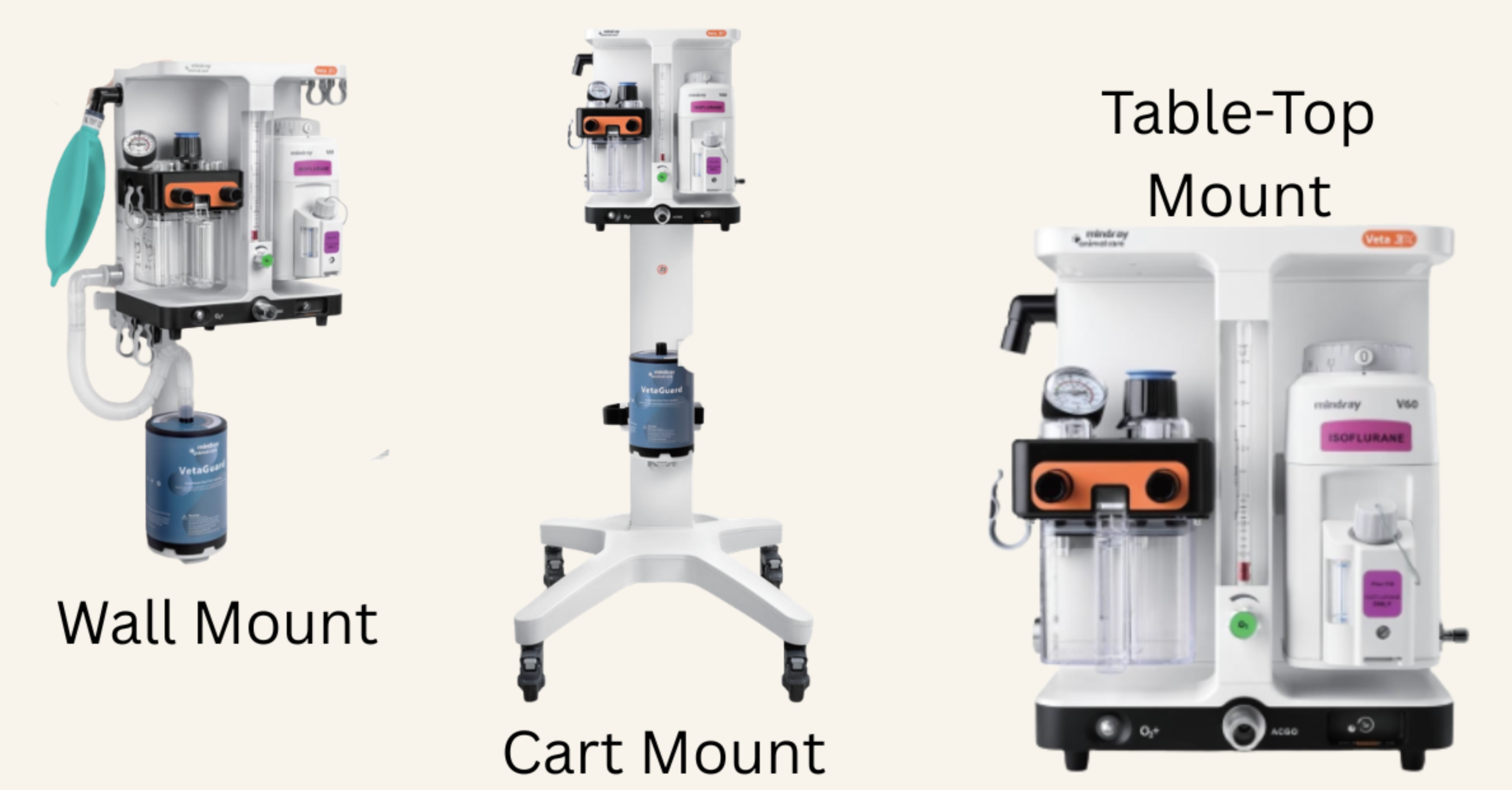
Veta 3X
Investing in a new anesthesia machine is one of those decisions that quietly shapes your entire surgical workflow. It’s so important to choose equipment your team can rely on every single day, across every patient, in every procedure.
If you’re in the process of evaluating options, here are five key factors worth paying close attention to.
Let’s dive in…
1. Reliability of Anesthetic Delivery
At the core of any anesthesia machine is its ability to deliver consistent, controlled anesthesia. Variability can directly impact patient stability, so, as you know, it’s not something to be taken lightly.
Look for systems with dependable vaporizers and pressure management features that help maintain steady anesthetic depth throughout a procedure.
A fixed-mount isoflurane vaporizer with a pour-fill system, like the one included with the Veta 3X, supports consistent output while minimizing handling complexity.
This is one area where simplicity and precision go a long way.
2. Compatibility with Your Patient Base
Not every practice has the same caseload, and your anesthesia machine should reflect that.
If you’re seeing a wide range of patients, from small cats and exotics to larger dogs, you’ll want flexibility in your breathing systems.
Machines that support both rebreathing and non-rebreathing setups allow you to adapt quickly without needing separate equipment. The inclusion of a Bain system kit and disposable Bain circuit makes it easier to safely anesthetize smaller patients without overcomplicating your setup.
Versatility here directly translates to smoother case flow.
3. Ease of Use for Your Team
Anesthesia is managed by a team, often in fast-paced environments. Intuitive, easy-to-use equipment reduces training time and helps minimize errors.
Features to look for:
Clearly labeled and accessible controls
Logical component layout
Straightforward switching between systems
When components like the APL valve, CO₂ absorber, and breathing circuits are easy to access and manage, your team can stay focused where it matters most…on the patient.
It’s also worth considering how well a new anesthesia machine will integrate into your existing workflow without slowing your team down.
The goal is to create a smoother, more predictable surgical environment. Equipment that’s quick to set up, easy to maintain, and intuitive to use can reduce delays between cases and help your team stay efficient throughout the day.
4. Included Components and Setup Readiness
One of the most overlooked factors when purchasing a new anesthesia machine is what actually comes with it. A more complete system, like one that includes:
Fixed mount Iso vaporizer (pour fill)
O₂ hose
US gas hoses (DISS/DISS)
Bain system kit
Disposable Bain circuit
…allows your team to get up and running quickly without sourcing additional parts or troubleshooting compatibility issues.
It’s a small detail that makes a big difference during setup.
5. Cost, Warranty, and Long-Term Value
Price always matters, but it should be evaluated alongside what you’re actually getting.
A system priced at $4,000 (including shipping) with a 3-year parts-only warranty offers a clear, predictable investment. Beyond the upfront cost, consider:
Expected lifespan of the equipment
Ease of maintenance
Availability of replacement parts
A well-balanced machine provides not just affordability, but dependable performance over time, without constant repairs or workarounds.
Reliability Where It Counts
Choosing the right anesthesia machine goes beyond specs on a page. It’s about finding a system that fits your patients, supports your team, and performs consistently under real clinical conditions.
When you evaluate options through that lens, reliability, flexibility, usability, completeness, and long-term value, you’re far more likely to land on a machine that truly supports your practice day in and day out.